Digital Route-To-Market
FMCG CEOs: 13 Sins Killing A DTC Business & How To Succeed A DTC Turnaround

Author | Managing Director & Partner @ FFA
“Face reality as it is, not as it was or as you wish it to be” – Jack Welch
To join the ~19,300 FMCG executives that receive automatically all our FMCG CEOs Insights (posts & articles like this one), sign-up to our newsletter at the following link: FMCG CEOs: Managing For Growth
Over the last 7 years, we:
Worked on multiple global DTC projects (strategy, M&A, turnaround) for the top 50 largest FMCG companies
Met 30+ FMCG DTC CEOs with company's revenue ranging from $10m to $250m p.a.
The below are our first-hand learnings enriched as usual with extensive research. The overall is summarized in five key messages. Enjoy the read
1) DTC: From hype to deception
We extensively covered in the below publication last year the 'why' & the 'what' behind the above assertion
Few updated charts to bring the most recent perspective:
Generally, DTC has been going through three phases over the last 15 years & we have entered since 2021 into the deception phase

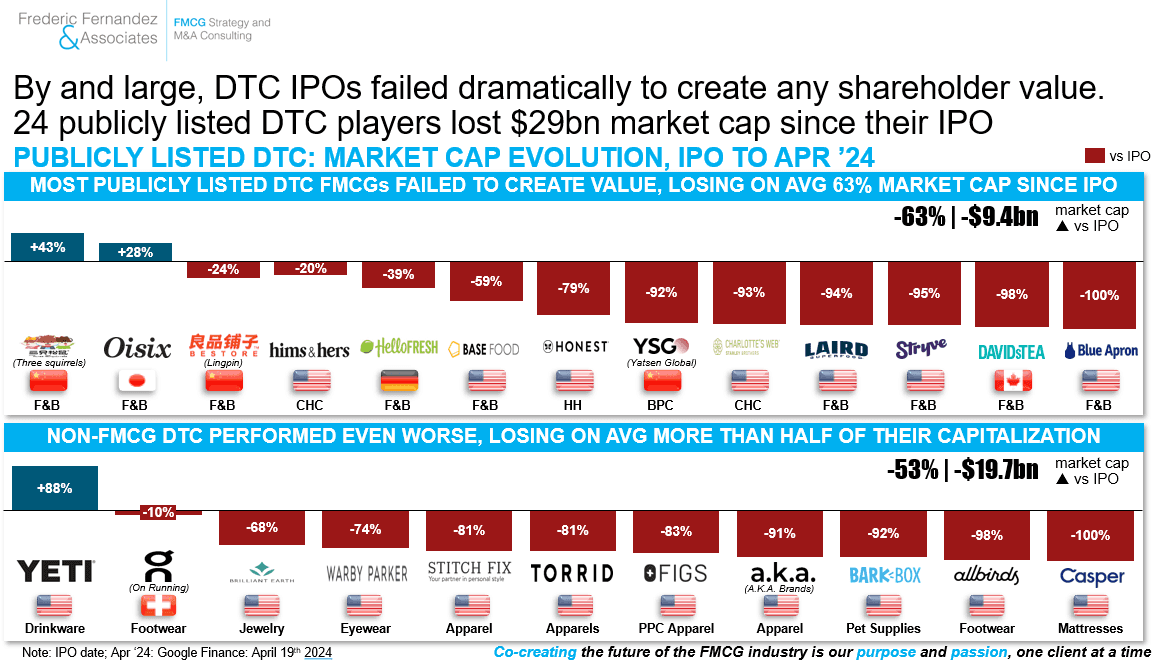
Specifically, the majority of (FMCG) DTC IPOs failed to create any shareholder value
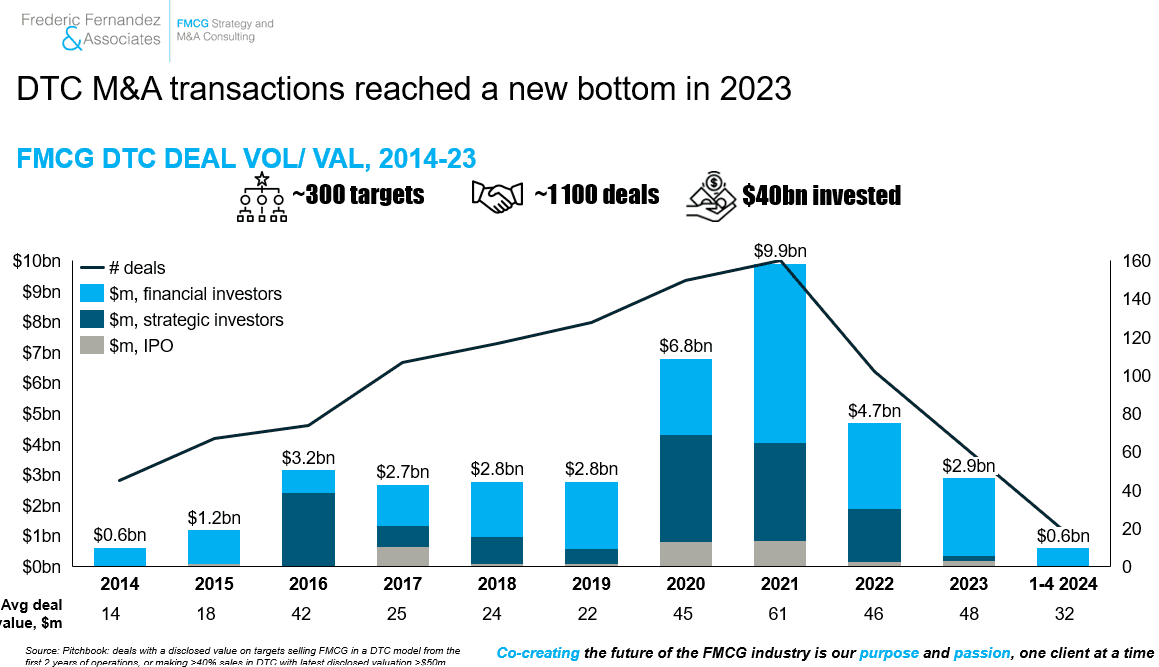
FMCG DTC M&A reached a new bottom in 2023 & in Q1 2024 with Strategics that have completely stopped acquiring DTC assets
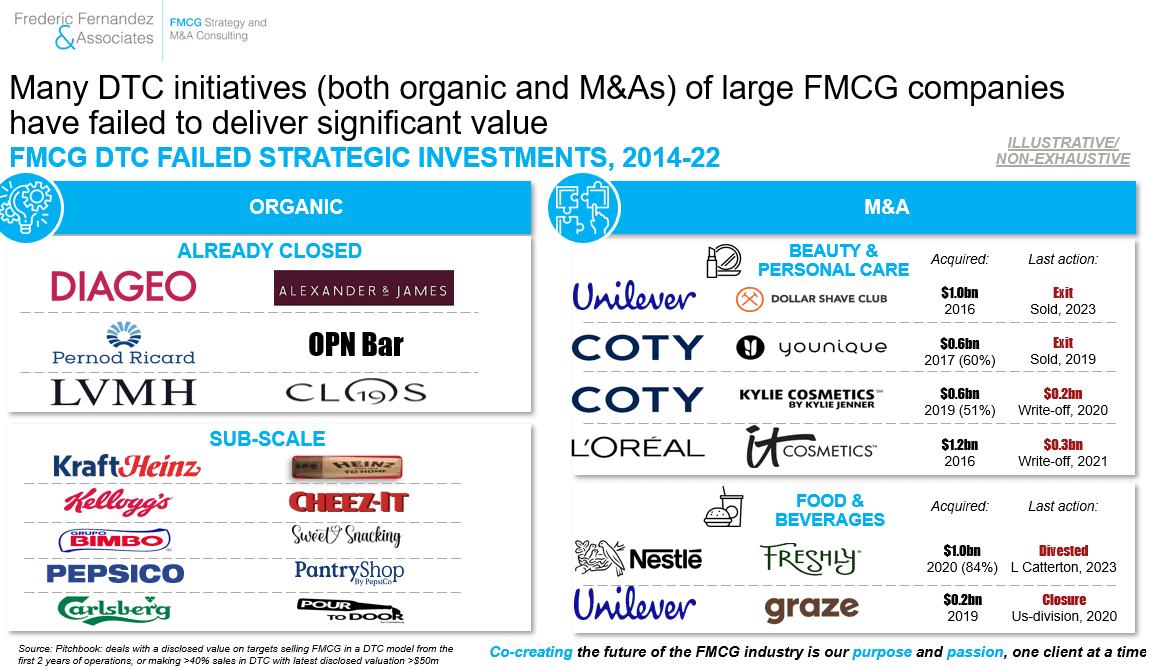
Most DTC initiatives (build, acquire) of the world largest FMCG companies failed (with some acquirers offloading now those assets: UL/ Nestle with DSC & Freshly)
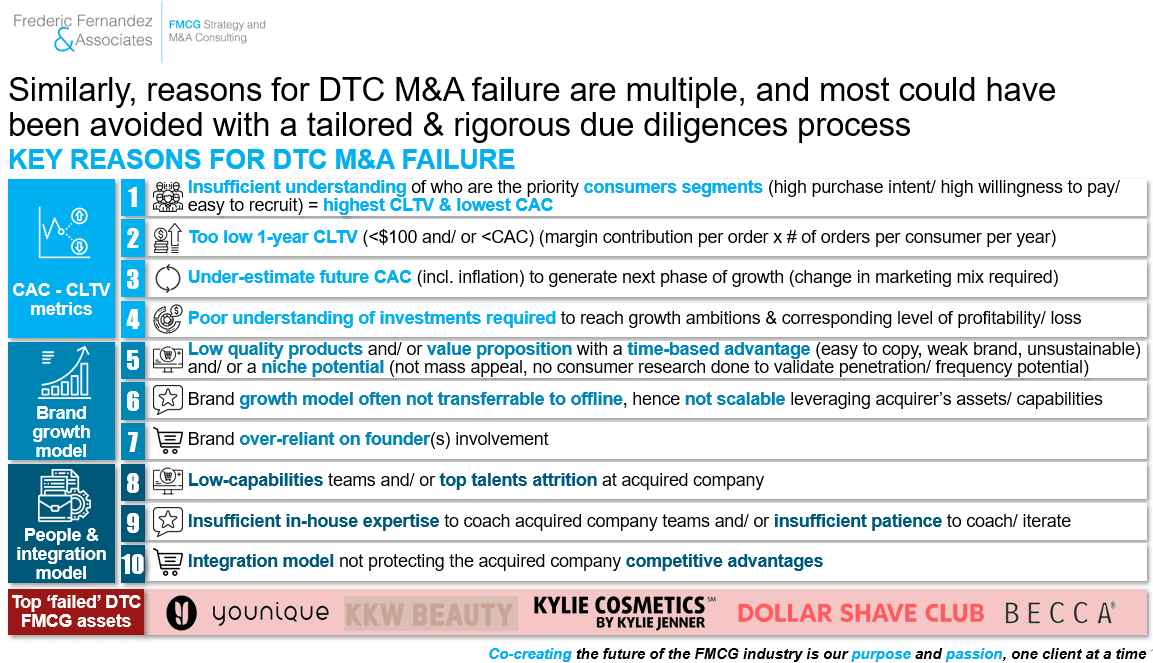
Multiple reasons explain the above
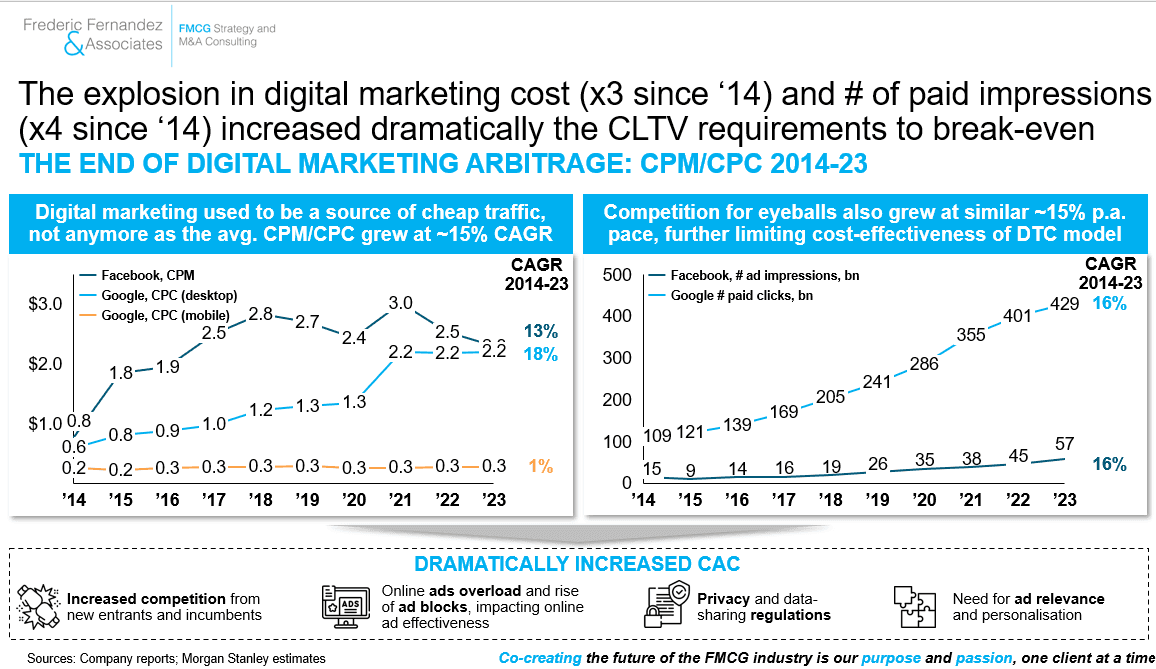
Specifically, the overreliance of DTC businesses on digital marketing & CPM/ digital impressions steady increase played an important role
2) Too Few (Lackluster) Success Cases
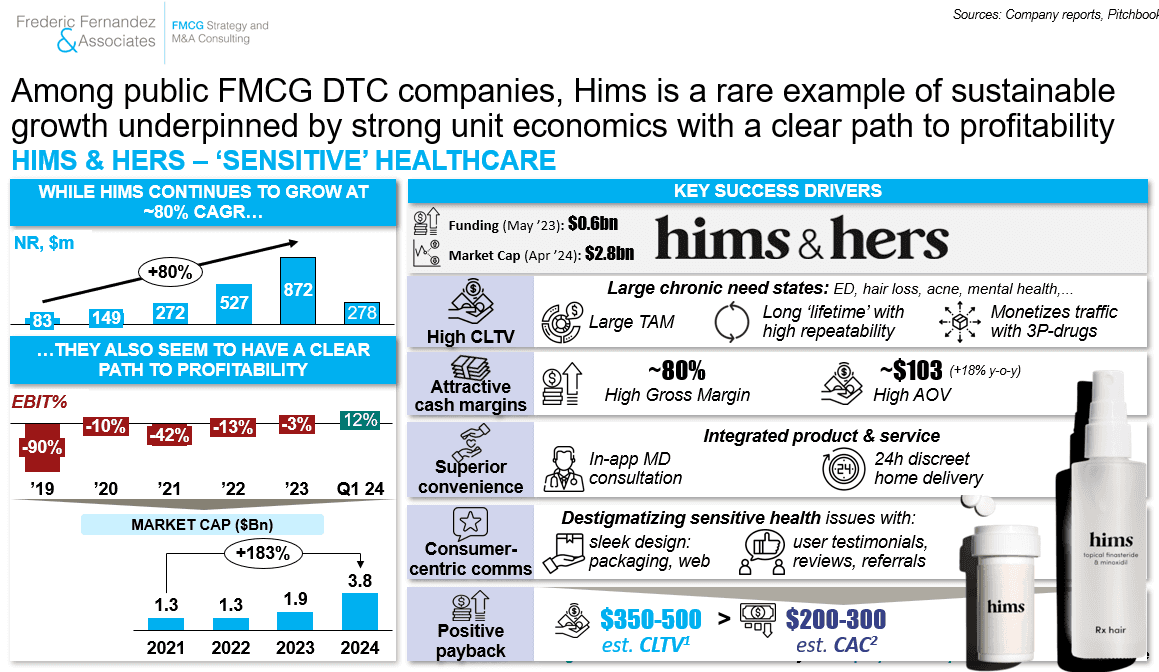
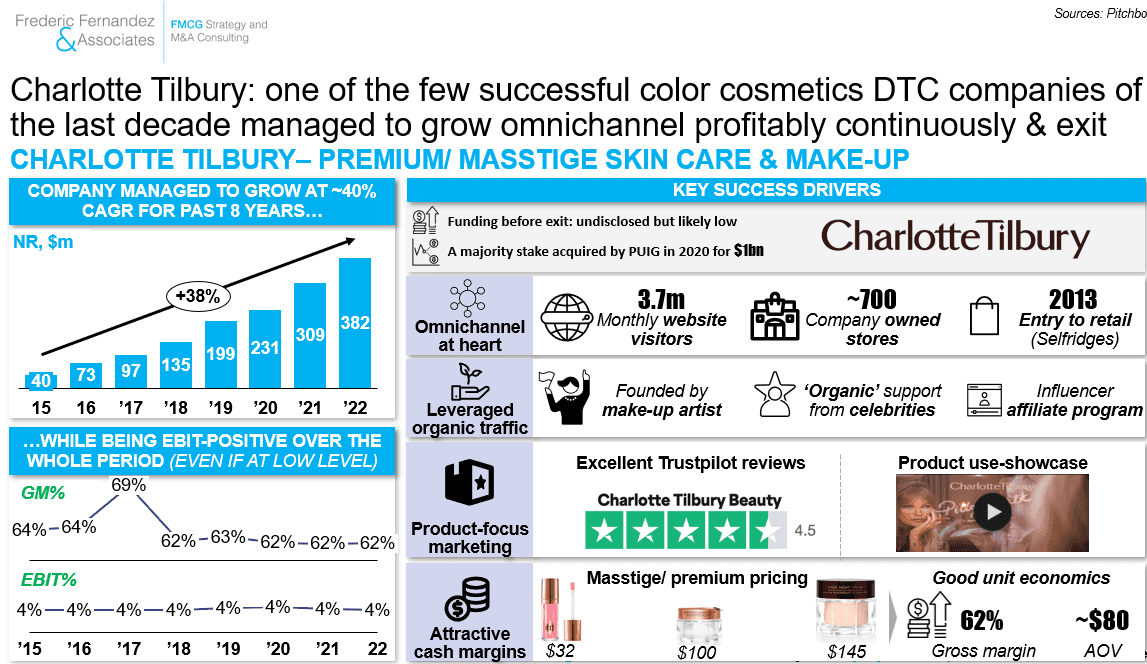
(Relative) FMCG DTC success cases exist but are rare. Profitability is often lackluster even for scale-ups assets (cf. Hims and Charlotte Tilburry). Retail expansion can step-change performance dynamics if very specific conditions are met (cf. Harry's). Oddity (a DTC pure-play), for now, stands out (both top-line CAGR & profitability wise) but the jury is still out whether current metrics can be sustained
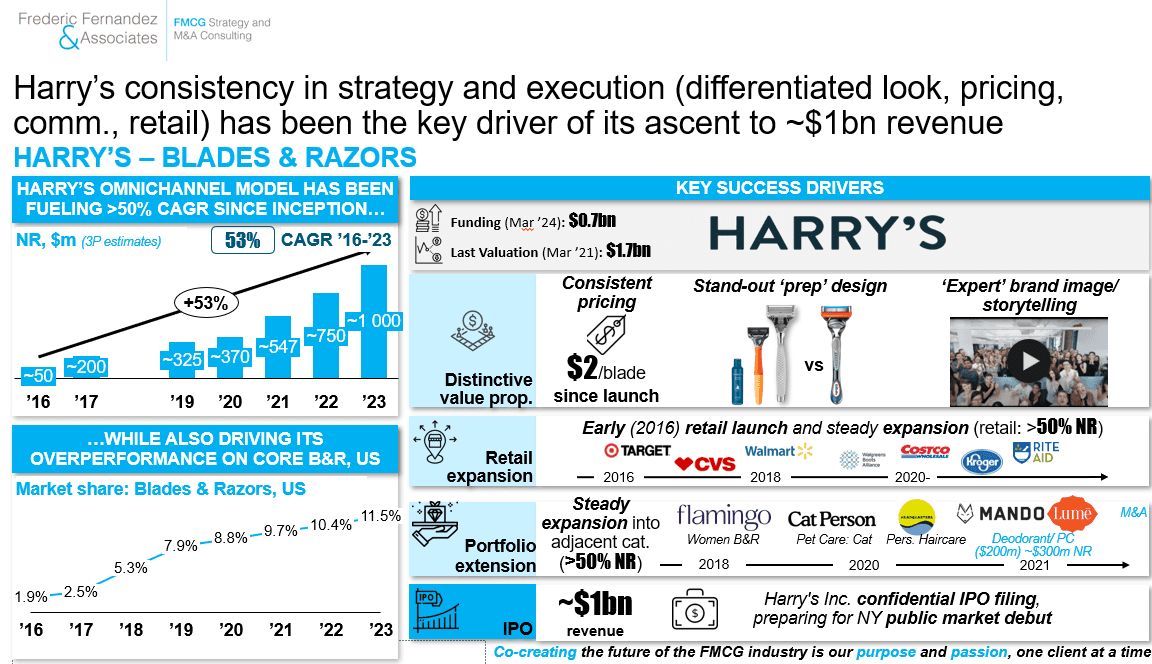
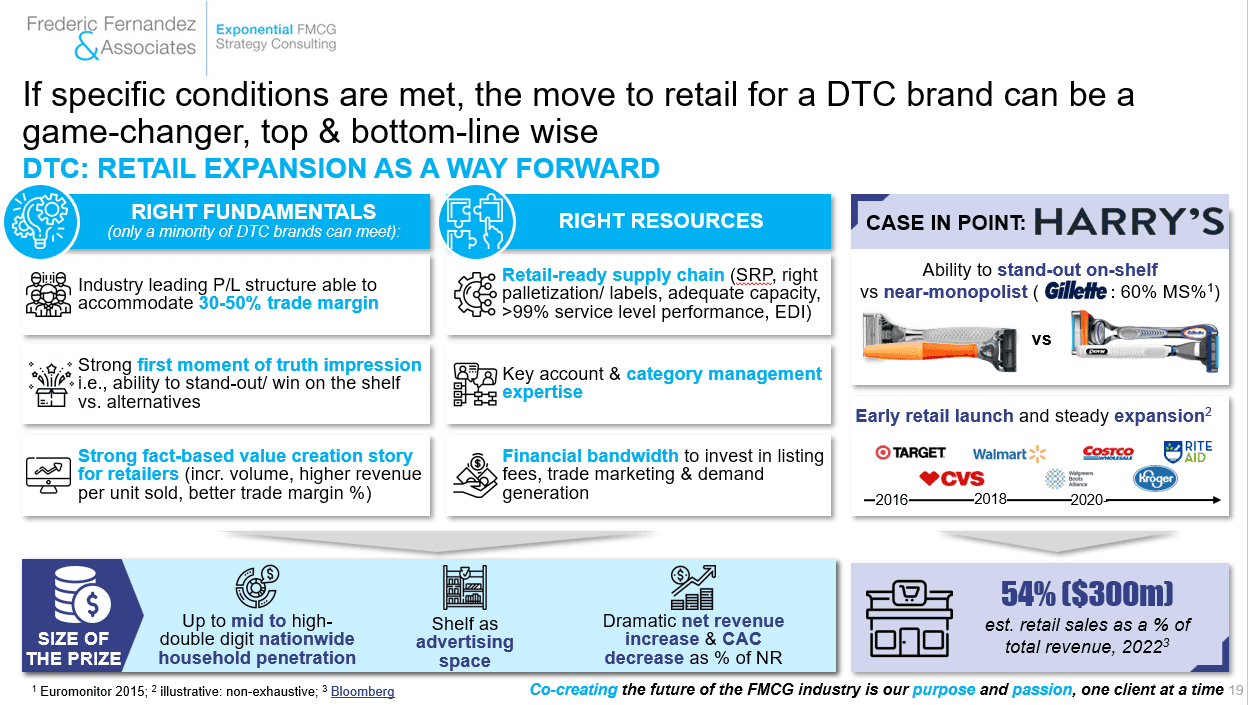
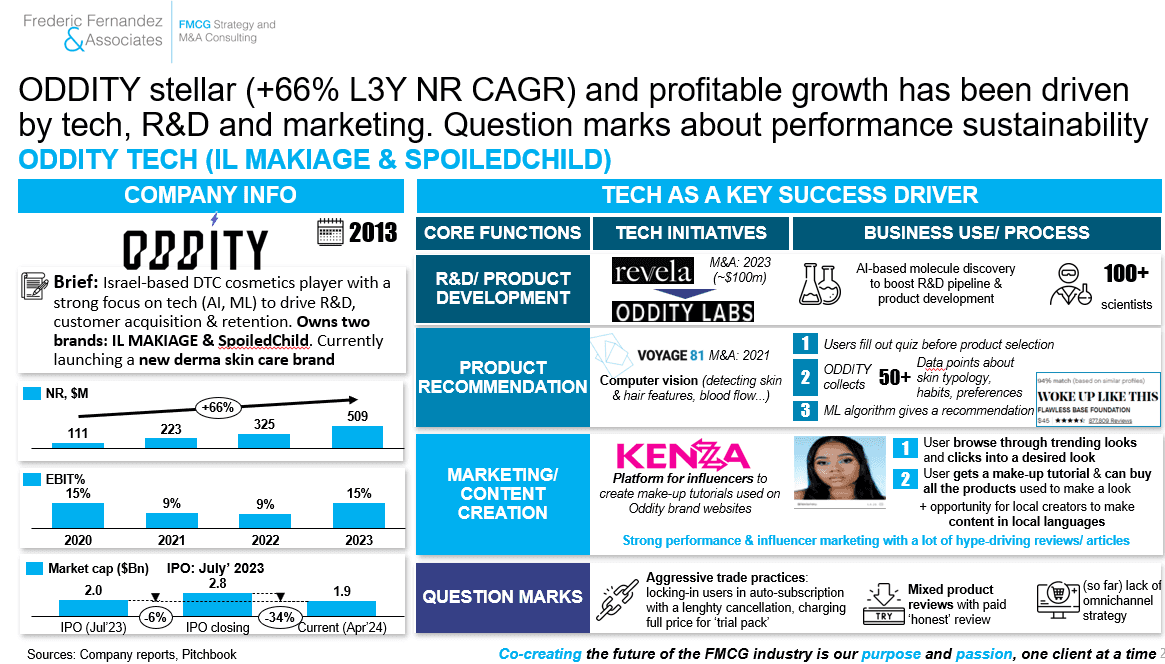
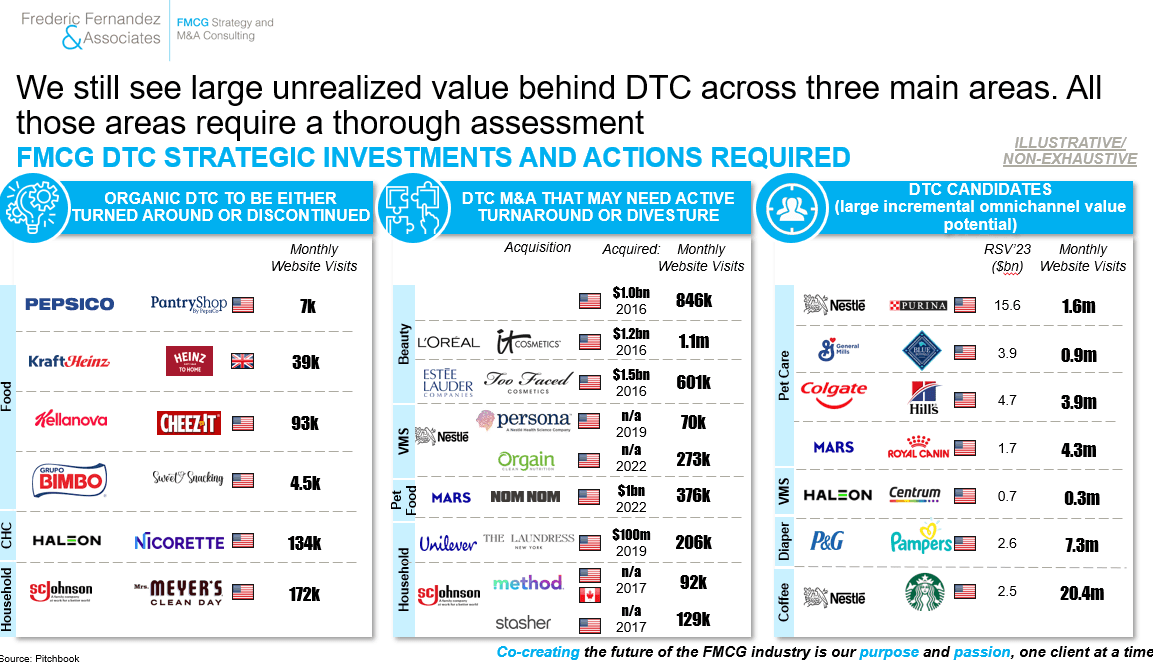
3) A large unrealized value (~$100bn assets value on hands) behind DTC for both financial & strategic investors (DTC initiatives with low right-to-win, underperforming DTC acquisitions, unaddressed DTC organic opportunities)
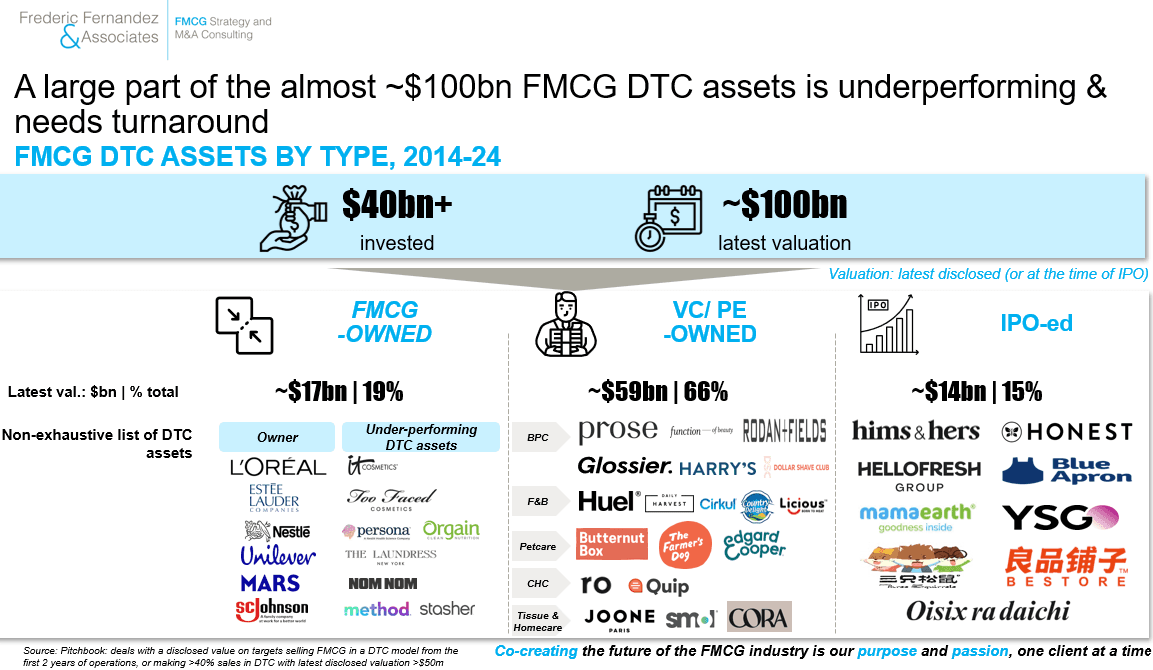
4) About the difficulty to get DTC right or 13 sins killing a DTC business
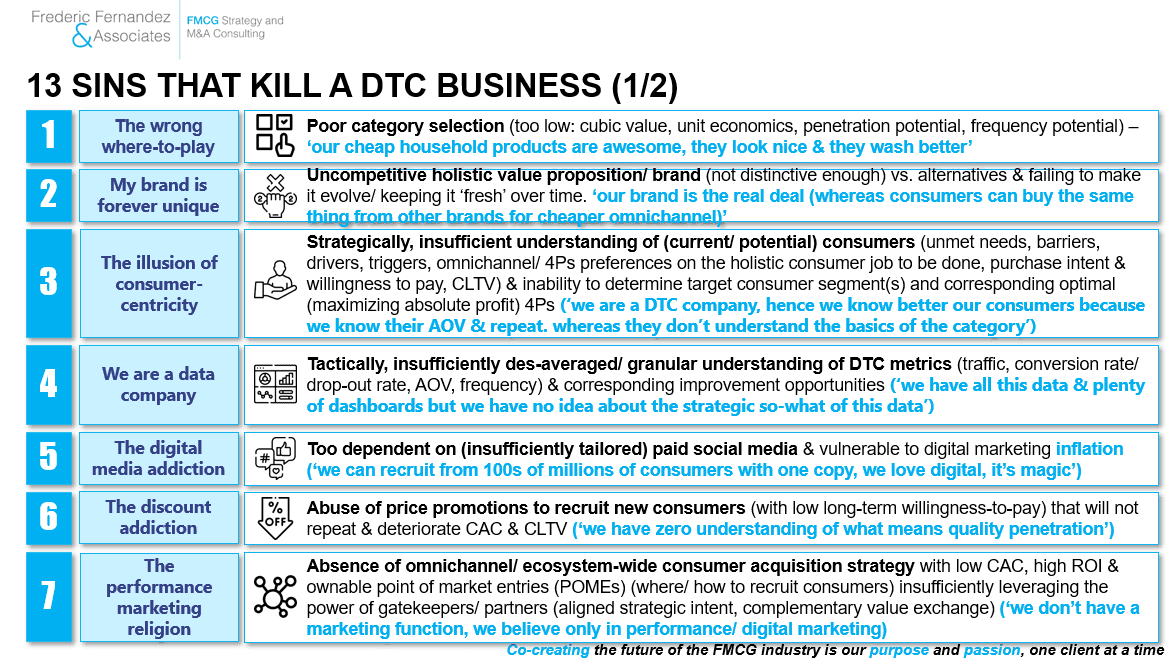
Based on our experience, we listed 13 'sins' killing DTC businesses, all illustrated with 'real' verbatim
The below is a non-exhaustive list and not all DTC companies suffer naturally from all of those traits
Here are the 13 sins (all detailed in the two below charts):
i) The wrong where-to-play
ii) My brand is forever unique
iii) The illusion of consumer-centricity
iv) We are a Data company
v) The digital media addiction
vi) The discount addiction
vii) The performance marketing religion
viii) 'The DTC myopia' or the extreme opposite 'the retail FOMO' with nothing in-between
ix) We are a Tech company
x) The 'jumping around' syndrome
xi) The 'budget version 42' syndrome
xii) Leave us alone
xiii) I have to know it all

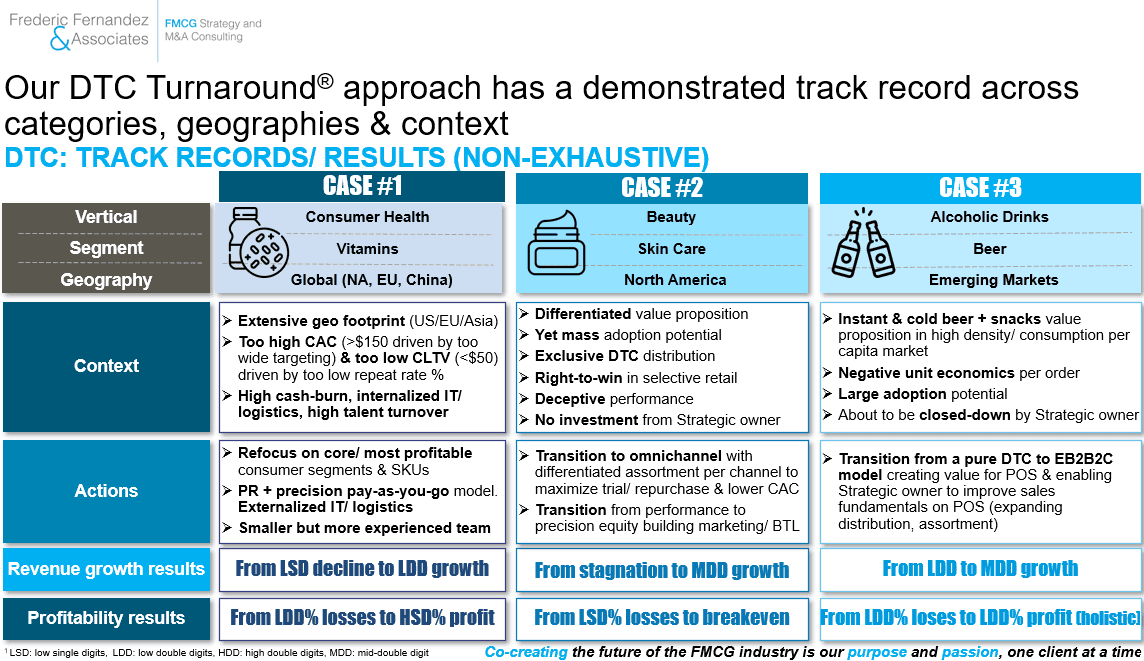
5) Achieving the full value of DTC assets require a rigorous omnichannel, consumer-centric &, financial approach. Our approach has a successful track record in a wide range of context (categories, geographies, growth acceleration/ turnaround)
Considering all of the above (the rarity of success cases, the difficulty to succeed & the high unrealized value behind DTC), the key question is: how to turnaround a DTC business & achieve the full value of DTC assets?
Here is our perspective:
i) First it is important to keep in mind that objectively only a minority of businesses can develop a right-to-win (large, profitable) as a DTC pure-play
ii) The question is often to 'right-size DTC' to maximize omnichannel absolute profit (what is its role, for which consumer segments, with which value propositions) which requires an omnichannel lens (ie. it is hard to have a DTC strategy without determining an overarching omnichannel strategy)
iii) Generally, without a granular understanding of current & potential consumers (unmet needs, barriers, drivers, triggers, omnichannel/ 4Ps preferences on the holistic consumer job to be done, purchase intent & willingness to pay, omnichannel CLTV), it is impossible to solve the problem, hence the need to complete bespoke quantitative & qualitative consumer research
iv) Specifically, mastering the art of demand curve & strategic segmentation are both critical considering the high cost of the channel (ie. determining the exact consumer segment that has both the purchase intent & the willingness to pay the price point that maximizes absolute profit for a DTC business)
v) From there, a granular understanding of those target consumers path-to-purchase/ consumer journey is crucial to determine the highest ROI tactics to recruit them. Successful companies recruit consumers through different channels (not only digital marketing) leveraging gate-keepers (persons of influence that can drive the right recommendations to the target consumers) & partners (that have the same target consumers & with whom they can engage into a value exchange, ie. cross-promotion...). The objective is to identify the most effective Point Of Market Entries (POMEs) strategy
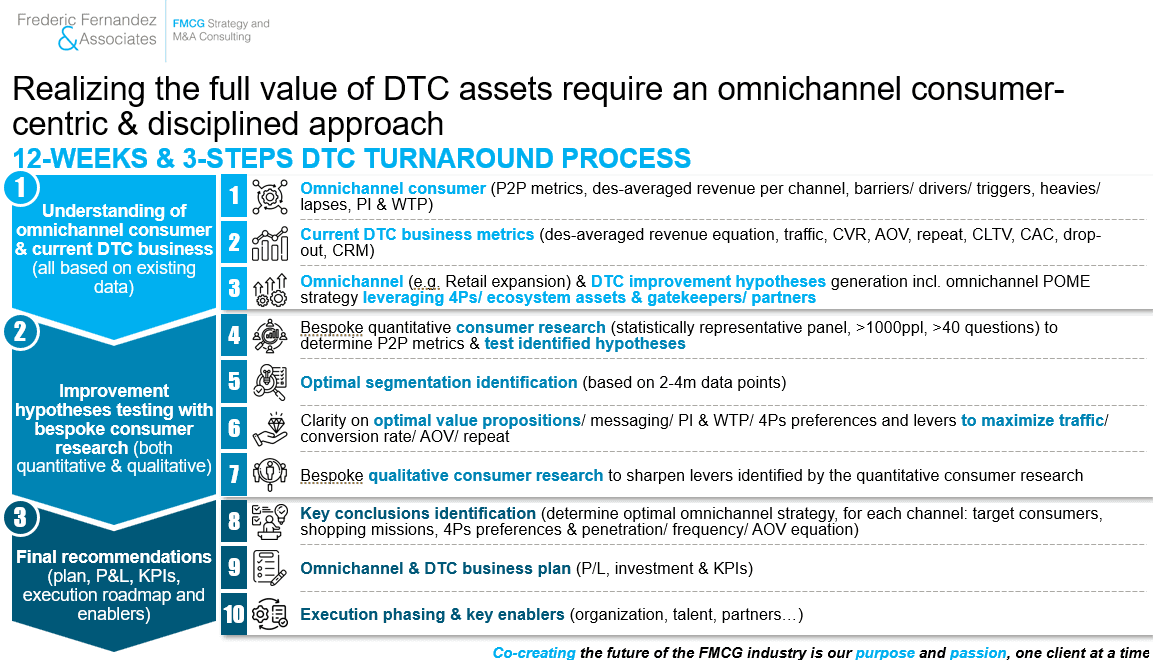
Here below is our 3-phases/ 10-steps approach that we have developed over the years with our Clients:
Bringing it all together:
Most DTC businesses failed & (relative) success cases exist but are rare
The FMCG industry has currently a high value at stake behind DTC assets (>~$100bn)
Few large FMCG brands today that could leverage DTC, are not & are leaving material value on the table
Strategy and execution at many DTC companies have significant room for improvement but it requires an omnichannel, consumer-centric & financially rigorous turnaround approach
As Jack Welch put it: “Face reality as it is, not as it was or as you wish it to be”
Still exciting times for DTC in the FMCG industry
Get in touch:
To follow Frederic, please click Here, To start a conversation, email at: frederic@fredericfernandezassociates.com
To get the full deck of this publication, please write us at contact@fredericfernandezassociates.com
To subscribe to our newsletter and receive all our CEOs Insights, sign-up at the following link: FMCG CEOs: Managing For Growth
About the Firm:
Frederic Fernandez & Associates (FFA) is a global bespoke Strategy Consulting Firm exclusively focused on Organic Growth (Zero-Based-Growth® approach), Digital GTM (Ecommerce 2.0®, DTC & Ecoystems and EB2B) and M&A serving the world largest FMCG companies. Its purpose is to help its clients win today while renewing their competitive advantages to win tomorrow. 14 out of the top world 20 largest FMCG companies are repeat Clients.
The Firm's team intervenes all across the globe and across all FMCG categories. To know more about the Firm, please visit our websites:
www.fredericfernandezassociates.com
No FFA employees own any stocks or financial instruments of any FMCG companies or companies mentioned in the above article. All the above information are public information
Enjoyed this article?

FMCG CEOs: Managing For Growth
Strategic insights for FMCG/ CPG CEOs