
Corporate Strategy
FMCG CEOs: 2023 Results In Review - The Dawn Of A New Shrinking-To-Glory Cycle?

Author | Managing Director & Partner @ FFA
"𝘛𝘩𝘦 𝘨𝘳𝘦𝘢𝘵𝘦𝘴𝘵 𝘦𝘯𝘦𝘮𝘺 𝘰𝘧 𝘬𝘯𝘰𝘸𝘭𝘦𝘥𝘨𝘦 𝘪𝘴 𝘯𝘰𝘵 𝘪𝘨𝘯𝘰𝘳𝘢𝘯𝘤𝘦, 𝘪𝘵 𝘪𝘴 𝘵𝘩𝘦 𝘪𝘭𝘭𝘶𝘴𝘪𝘰𝘯 𝘰𝘧 𝘬𝘯𝘰𝘸𝘭𝘦𝘥𝘨𝘦" Stephen Hawkins
To join the >16,000 FMCG executives that receive automatically all our FMCG CEOs Insights (posts & articles like this one), sign-up to our newsletter at the following link: FMCG CEOs: Managing For Growth
It's a wrap for the (calendar) Q4 2023/ full year 2023 earnings season for the world largest FMCG companies.
Taking a step-back, our take is simple on the world largest listed FMCG companies (n=50):
i) Pricing gains are getting annualized while volume losses continue (except on BPC) triggering 'top-line misses' (50% of the world largest FMCGs in Q4, up from 9% in Q1) & 'bottom-line beat' (>80% across the entire year) suggesting many FMCG companies have now entered into a 'shrinking-to-glory' cycle that reminds us about the 2016-19 period (volume decline, profitability improvement, value destruction trap) calling for a dramatic refocus on organic (volume) growth
Many FMCG companies have now entered into a 'shrinking-to-glory' cycle (volume decline, profitability improvement, value destruction trap) calling for a dramatic refocus on organic (volume) growth
ii) If all FMCG companies agree on this new priority (cf. CAGNY presentations & earnings calls presentations), the majority of them have poor track record in this area over the last decade and all will be assessed on results, not on shiny Powerpoint presentations
The majority of them have poor track record in this area over the last decade and all will be assessed on results, not on shiny Powerpoint presentations
iii) Gap between Winners & Losers is widening across verticals (impulse F&B, BPC, CHC vs. non-impulse F&B, Alc. Drinks) but also within (cf. underperformance of Estee Lauder, Reckitt, Shiseido, Henkel Consumer) as environment becomes more discriminating (from a consumer, customer & financial pov)
iv) If 2023 was a strong year of profitability recovery on the back of unprecedented inflation/ pricing (70% improved both GM% & EBIT%), 70% of FMCG companies are yet to recover their pre-COVID level profitability creating a dangerous temptation to continue to over-drive aggressively profitability at the expense of top-line growth (vs. a focus on top-line growth with moderate profitability gains). Learnings from the last decade should be fully captured/ understood
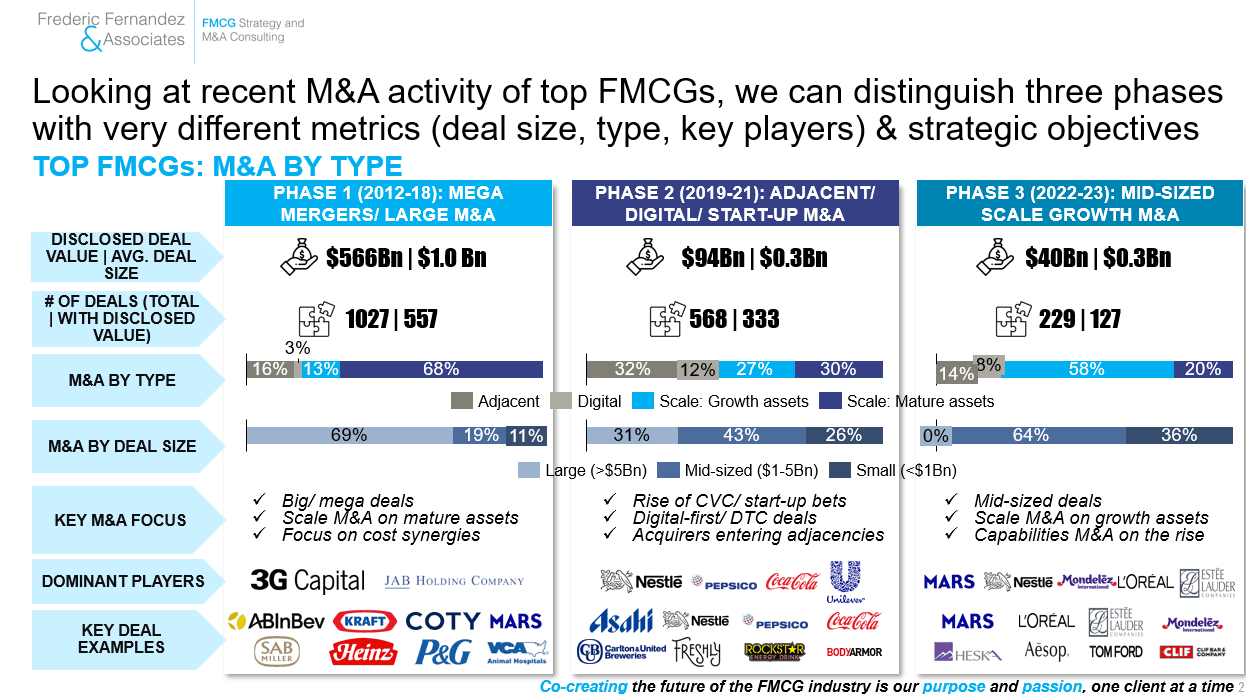
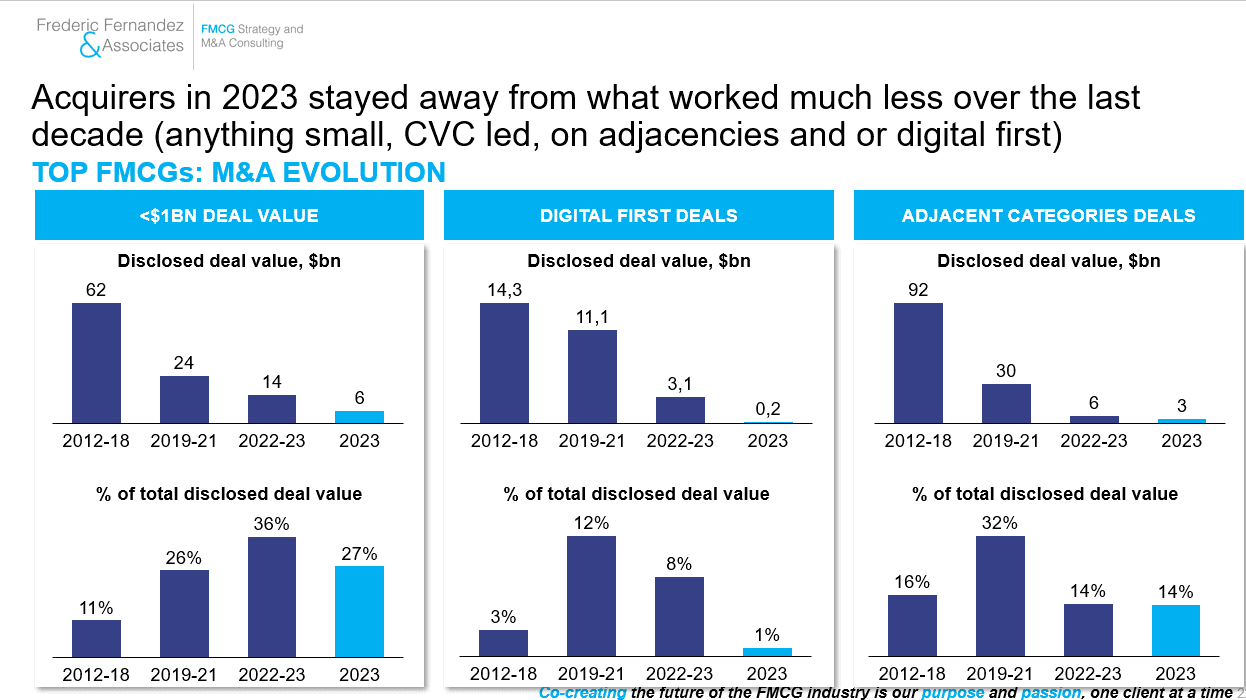
v) M&A market recorded an almost all-time low in 2023 in a context of high interest rate & poor track records over the last decade. 2023 M&A market was driven by few mid-size ($1-5bn) transactions (on same categories, in mostly developed markets) & by few players (L'Oreal, EL, Campbell's, Coke System) while divesture reached an all-time high (usual portfolio clean-up, hard to scale digital/ small brands, Russia divesture)
In this context, our views on 2024 remain unchanged with four key themes emerging stronger than ever (ranked by importance, on average, for the overall FMCG industry):
i) How to finally achieve organic (volume) growth outperformance & drive incremental category value? Our perpective is that it requires an adapted approach that is rigorously consumer-back, that is what we call Zero-Based-Growth®. More in the below article:
ii) How to drive growth outperformance in Emerging Markets (EMs), especially outside China? EMs remain to-date insufficiently strategized, especially outside China (poor understanding of local consumers & mental/ physical availabilities drivers/ constraints) leading to sub-optimal results despite a high value at stake (2/3 of global FMCG growth, on average lower market share than in Developed Markets, market share underperformance), the overall calling for an adapted approach:
iii) How to finally leverage M&A to complement effectively our organic Growth strategy with high ROCE (high success rate/ high value creation case)? In a context the M&A market is becoming increasingly interesting (increasing number of attractive targets with compressed valuations, lowering - yet still high - interest rates) but where risks remain abundant (majority of M&A transactions over the last decade did not pay-back - cf. 2012-22 M&A Analysis & 2023 M&A Year In Review articlse below, majority of current assets on the market have no future-proof value creation case) & hence where an adapted approach is required:
iv) How to update our Ecommerce strategy to outperform & maximize incremental omnichannel value with high ROCE? In a context Ecommerce contribution remains significant (~22% steady share of growth on average with great standard deviation ranging from ~50% for Pet Food/ Beauty through ~30s% for Consumer Health/ Diapers to ~5-15% for the rest – F&B, Household), external environment is becoming tougher (lower ecommerce growth, higher competition, increasingly fragmented & rapidly evolving e-customers landscape, higher pressure on profitability from the world largest pure players, Amazon ever growing importance), the Ecommerce strategies of the world top 50 FMCGs need often deep updates (unsustainable targets, out dated where-to-play/ how-to-win choices, insufficient consumer-back approach, unsustainable investment level with insufficient ROI, enhanced risk of omnichannel value destruction) - an updated approach is needed:
As Stephen Hawkins wrote: "𝘛𝘩𝘦 𝘨𝘳𝘦𝘢𝘵𝘦𝘴𝘵 𝘦𝘯𝘦𝘮𝘺 𝘰𝘧 𝘬𝘯𝘰𝘸𝘭𝘦𝘥𝘨𝘦 𝘪𝘴 𝘯𝘰𝘵 𝘪𝘨𝘯𝘰𝘳𝘢𝘯𝘤𝘦, 𝘪𝘵 𝘪𝘴 𝘵𝘩𝘦 𝘪𝘭𝘭𝘶𝘴𝘪𝘰𝘯 𝘰𝘧 𝘬𝘯𝘰𝘸𝘭𝘦𝘥𝘨𝘦". Could this be the largest risk that faces the world largest FMCG companies? 2024 results will tell. Exciting times
Here below are our detailed take on Q4 2023/ calendar year 2023 is ten brief key messages supported by corresponding key charts. Enjoy the read:
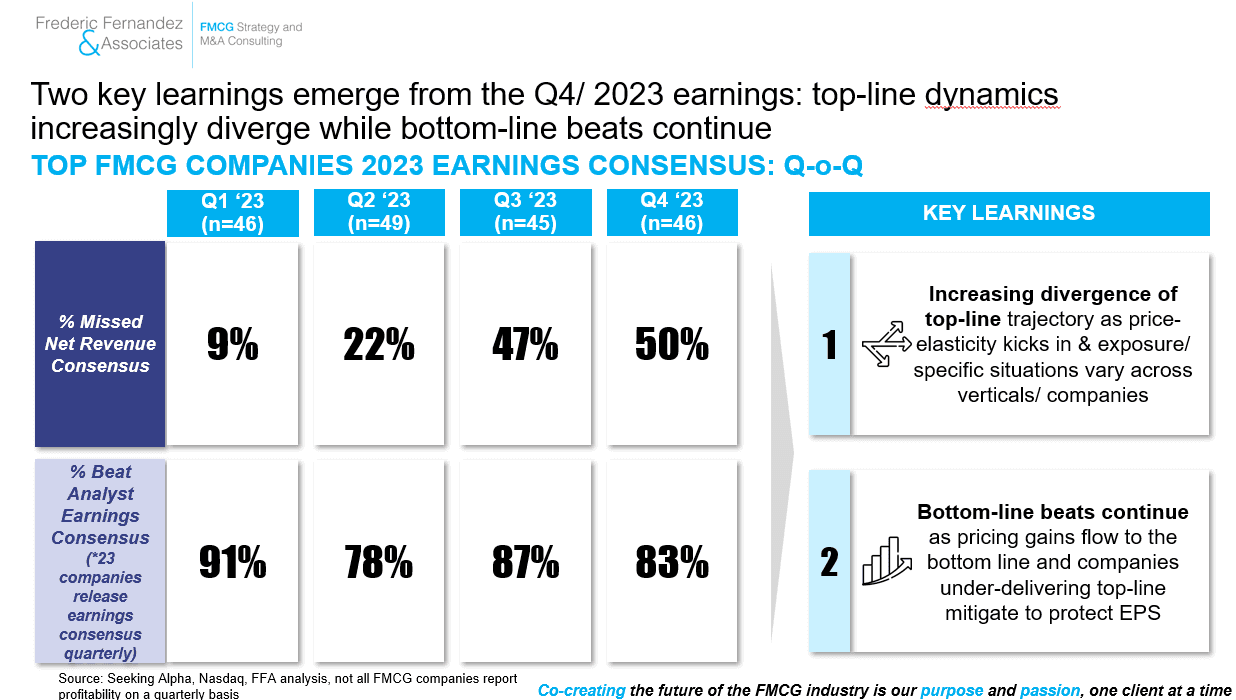
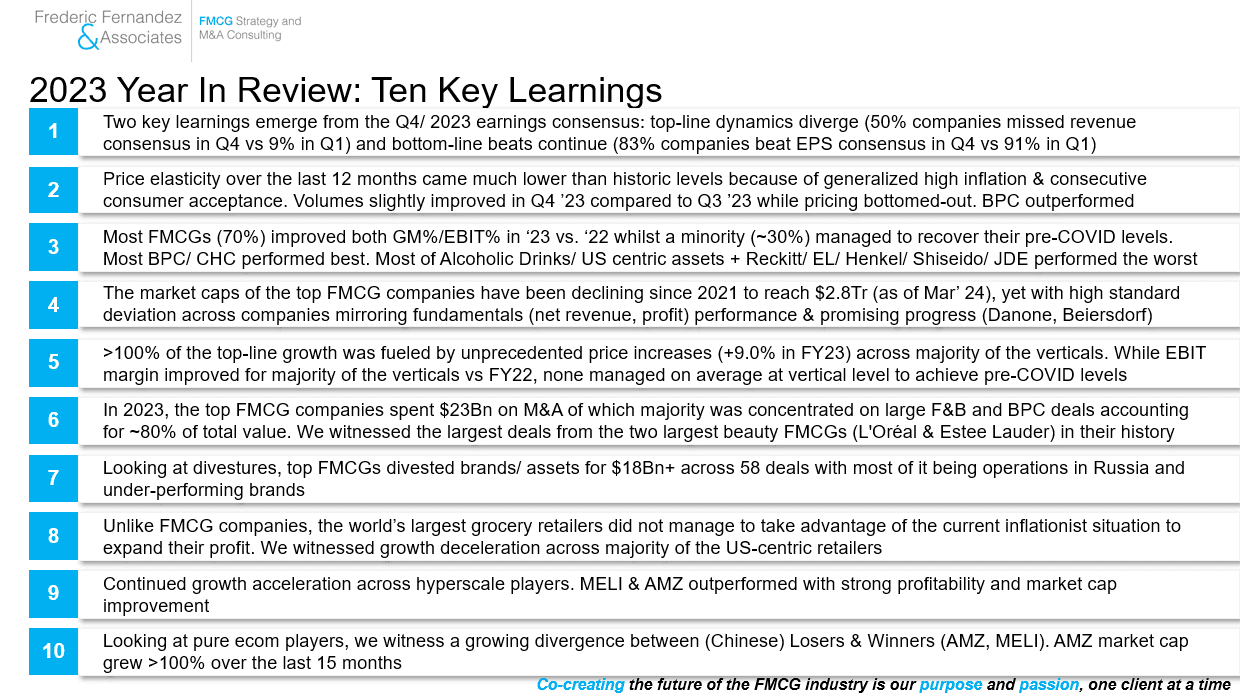
1) Two high-level learnings emerge from the Q4/ 2023 earnings season: top-line dynamics diverge (50% companies missed revenue consensus in Q4 vs 9% in Q1) and bottom-line beats continue (83% companies beat EPS consensus in Q4 vs 91% in Q1)
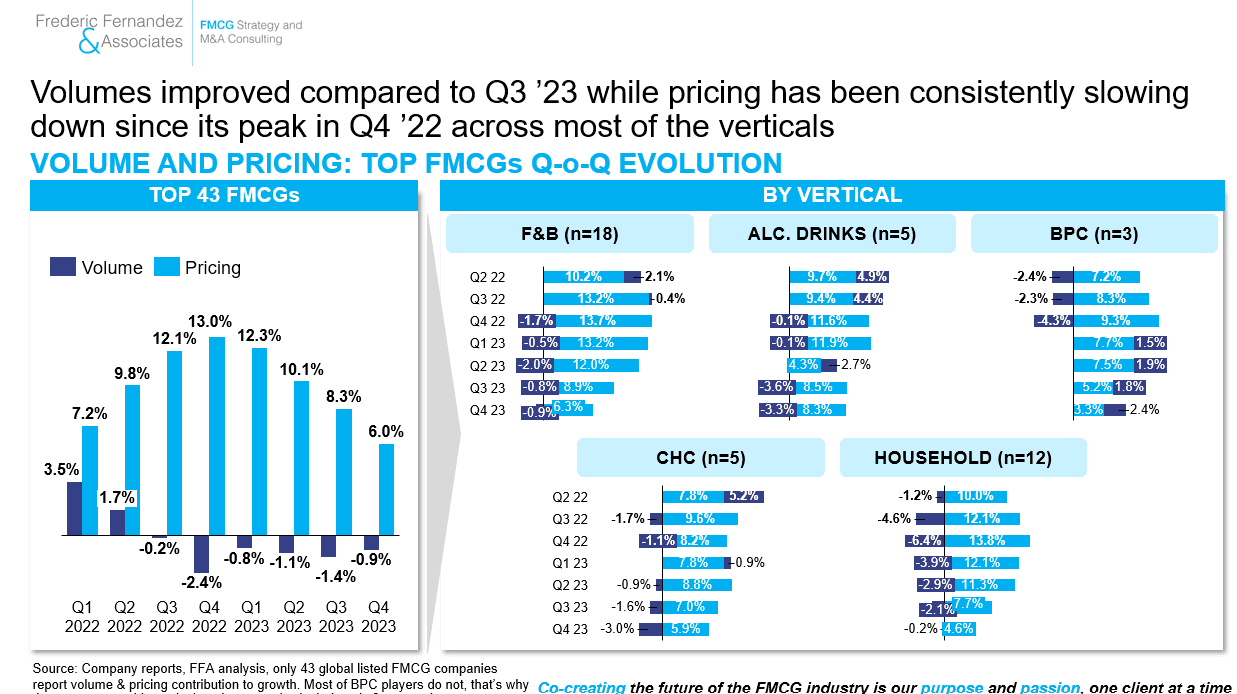
2) Price elasticity over the last 12 months came much lower than historic levels because of generalized high inflation & consecutive consumer acceptance. Volumes improved in Q4 ’23 compared to Q3 ’23 (-0.9% vs -1.4%) while pricing has been consistently slowing down since its peak in Q4 ’22 across most of the verticals. BPC remains resilient
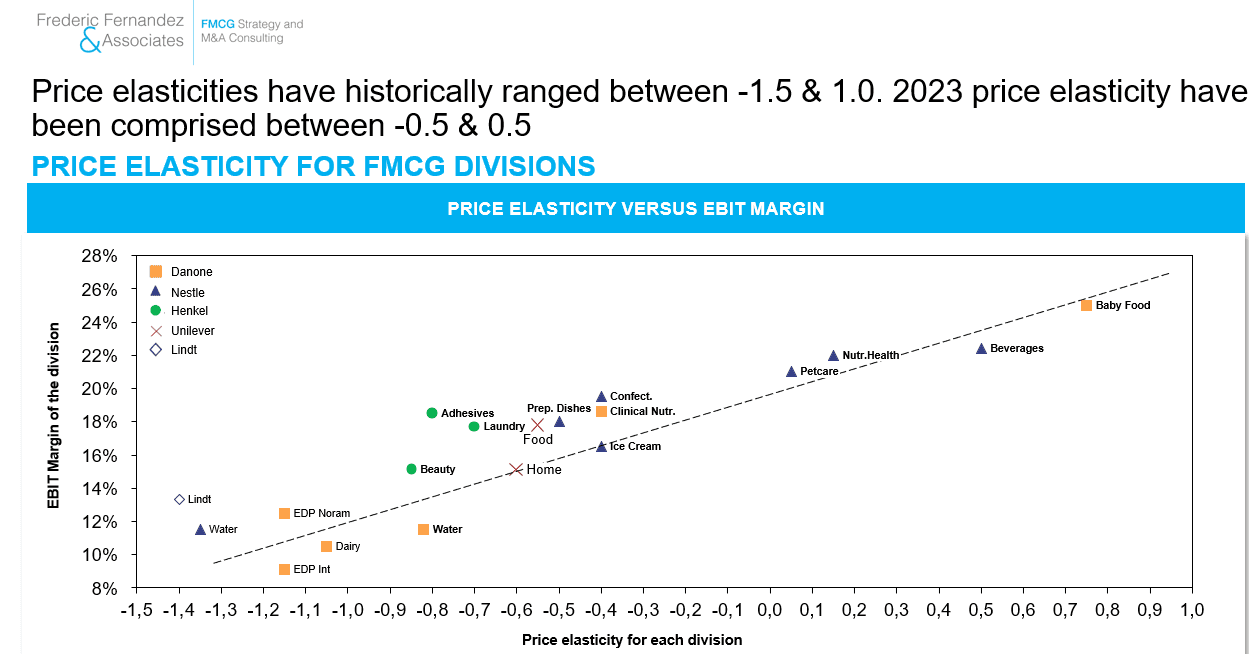
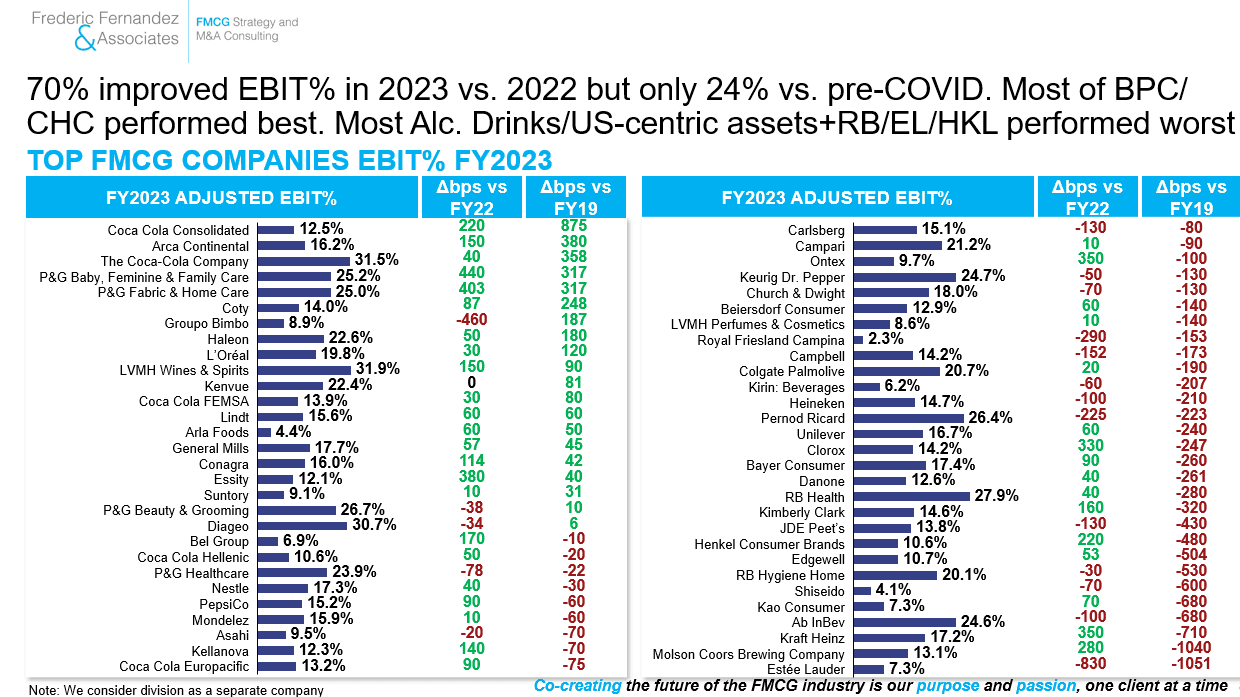
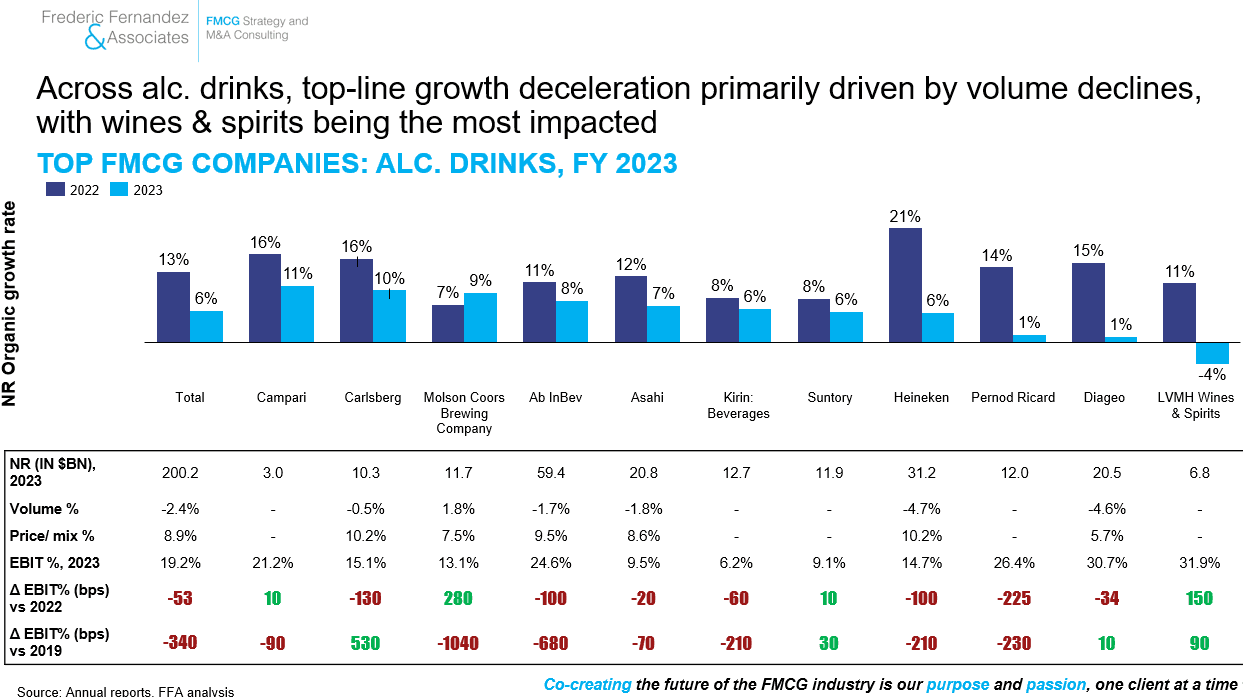
3) The majority of the world largest FMCG companies (70%) improved both GM% & EBIT% in 2023 vs. 2022 whilst only a minority (~30%) managed to recover their pre-COVID levels. Most of BPC/ CHC performed best. Most of Alcoholic Drinks/ US centric assets + Reckitt/ EL/ Henkel/ Shiseido/ JDE performed the worst
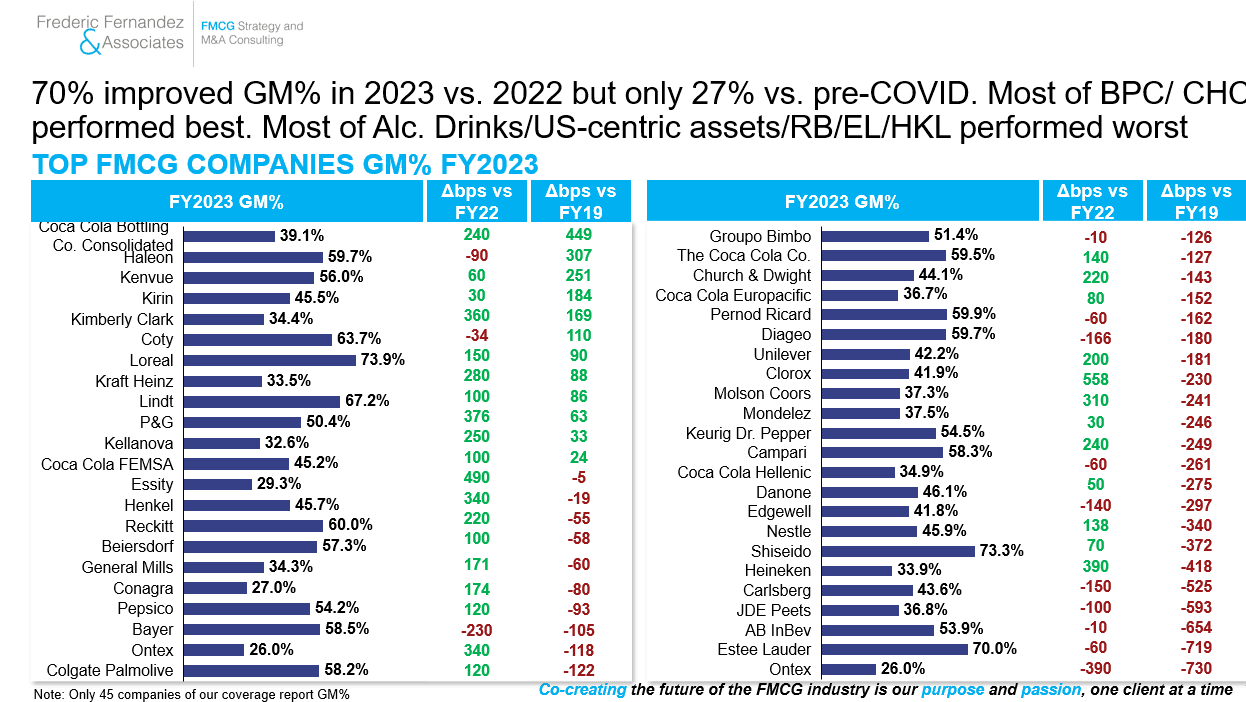
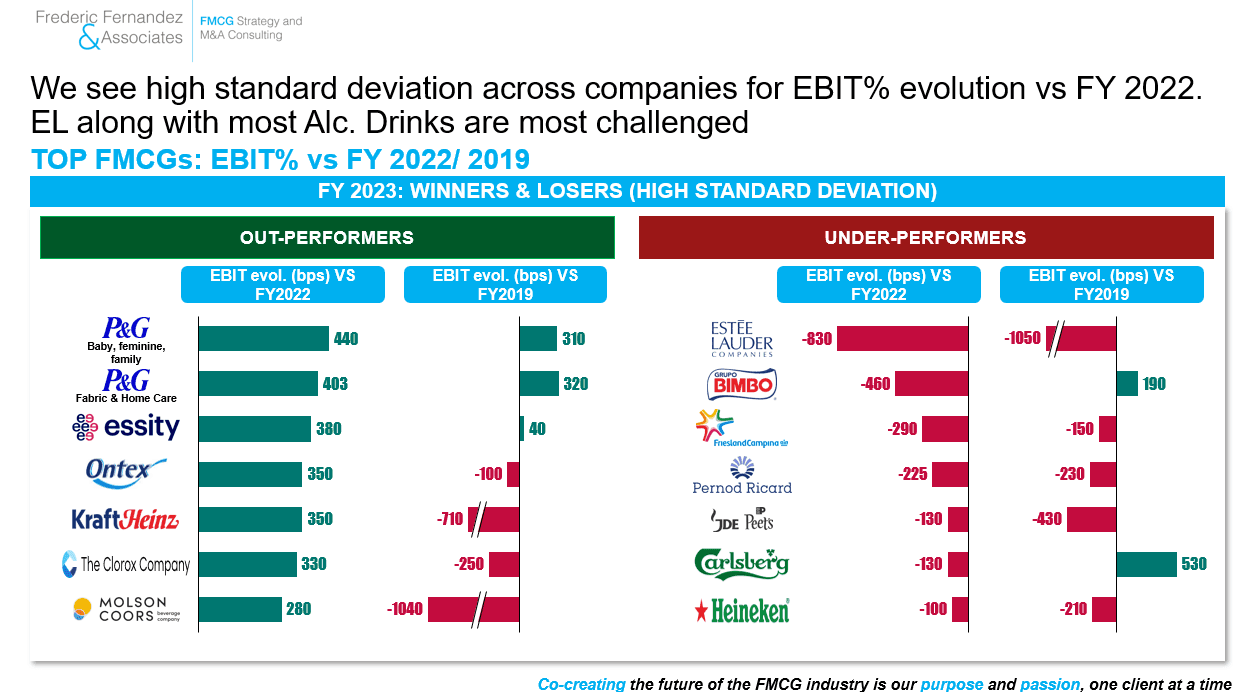
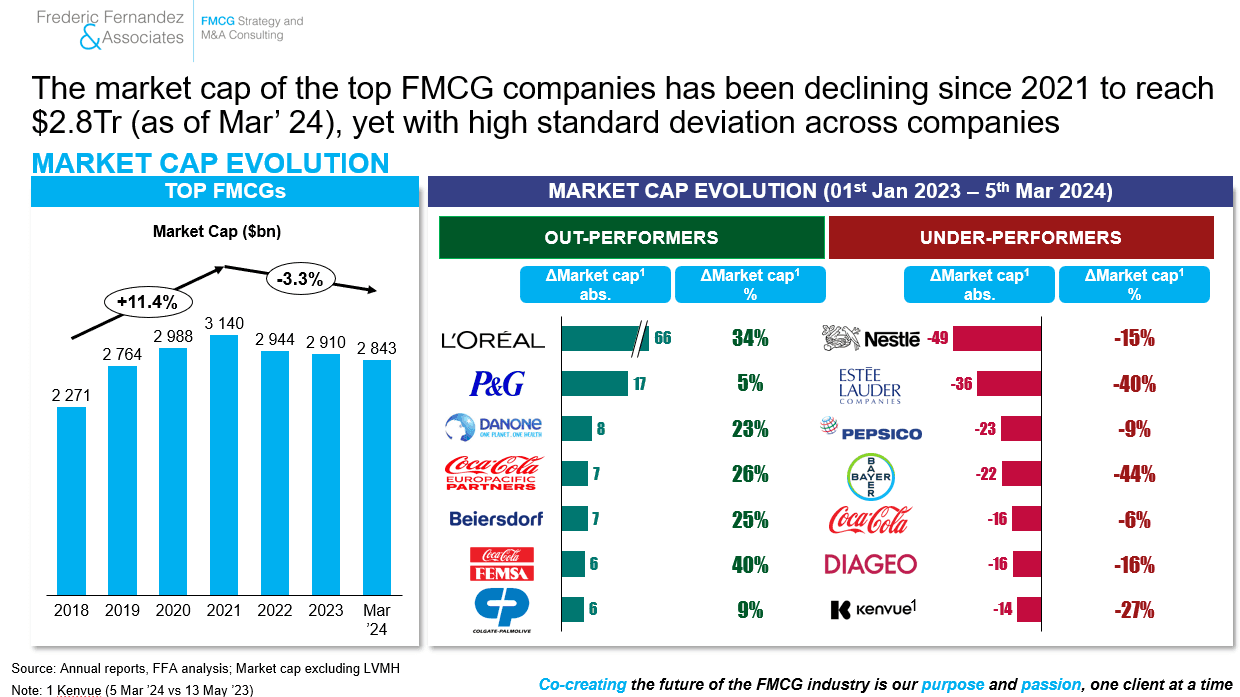
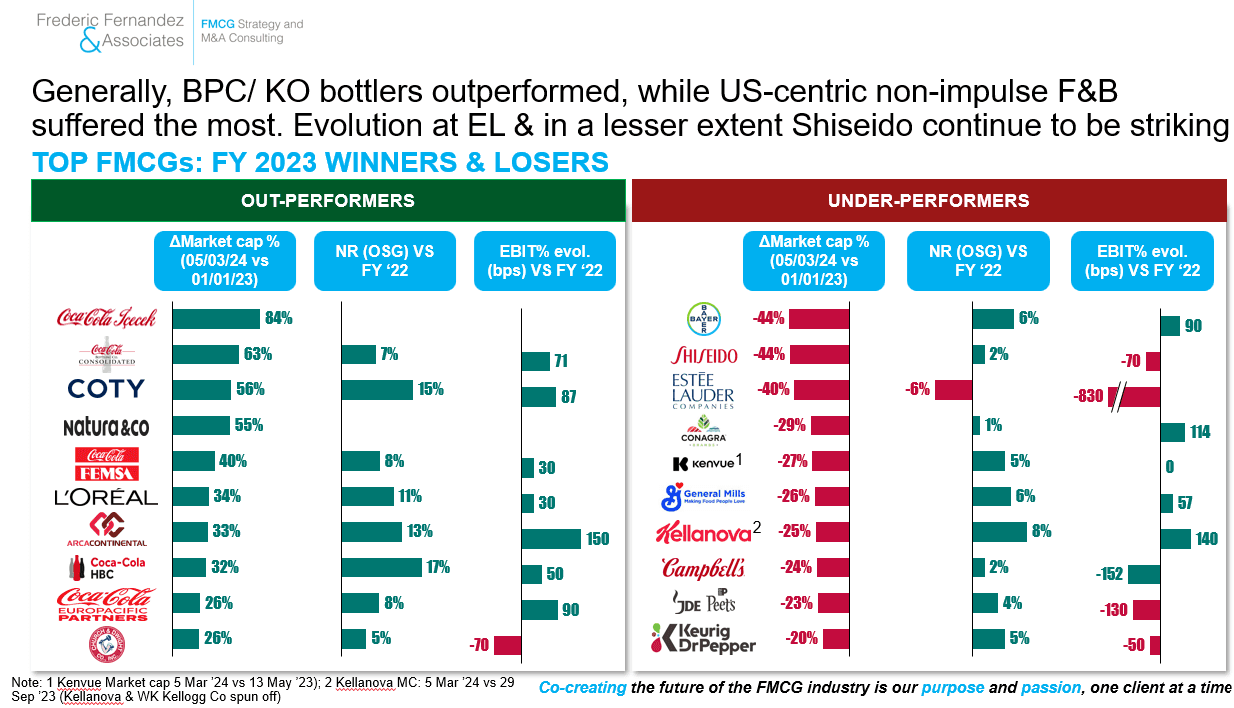
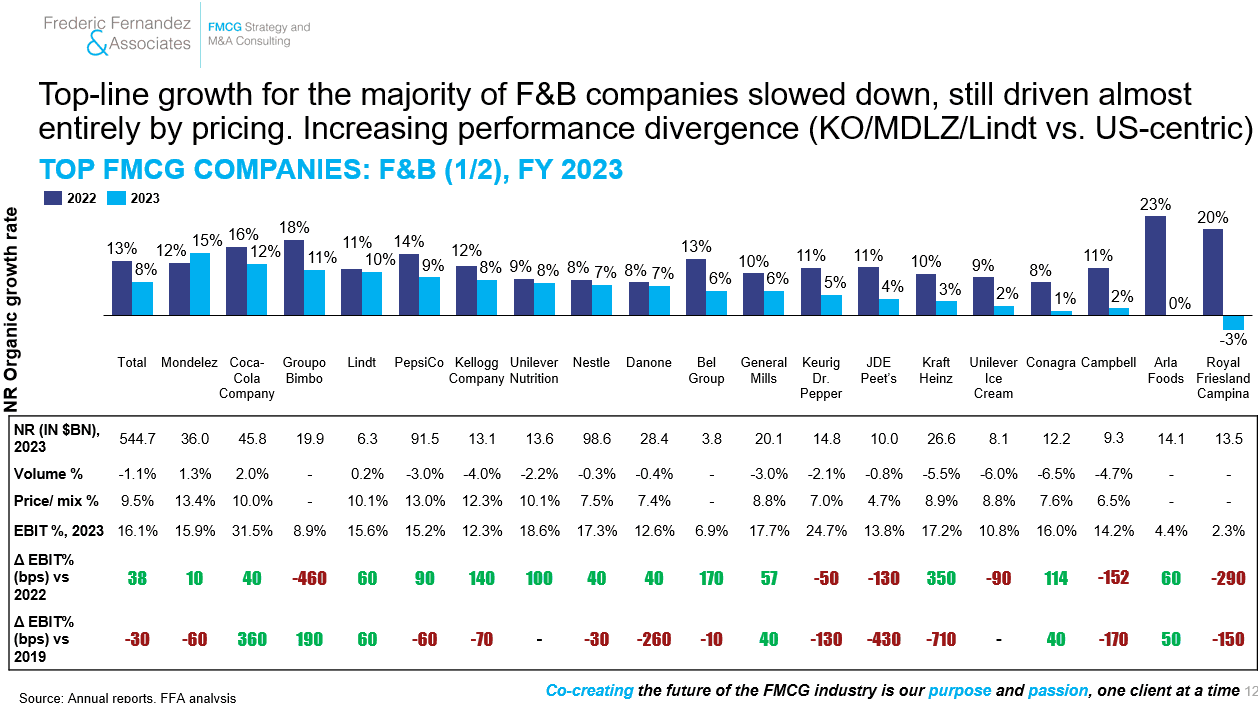
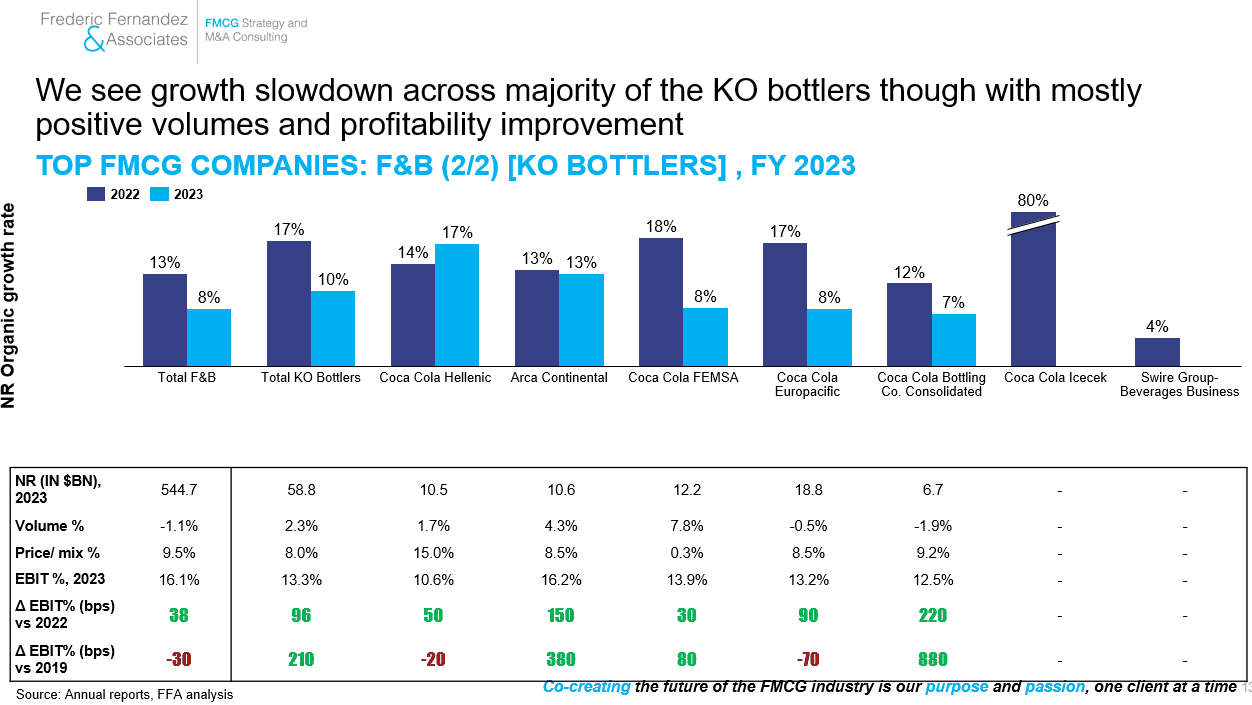
4) In 2023: P&G, L'Oreal, Beiersdorf, Danone, KO bottlers have been among the Winners while Estee Lauder, Shiseido & most of Alcoholic Drinks companies have been among the Losers
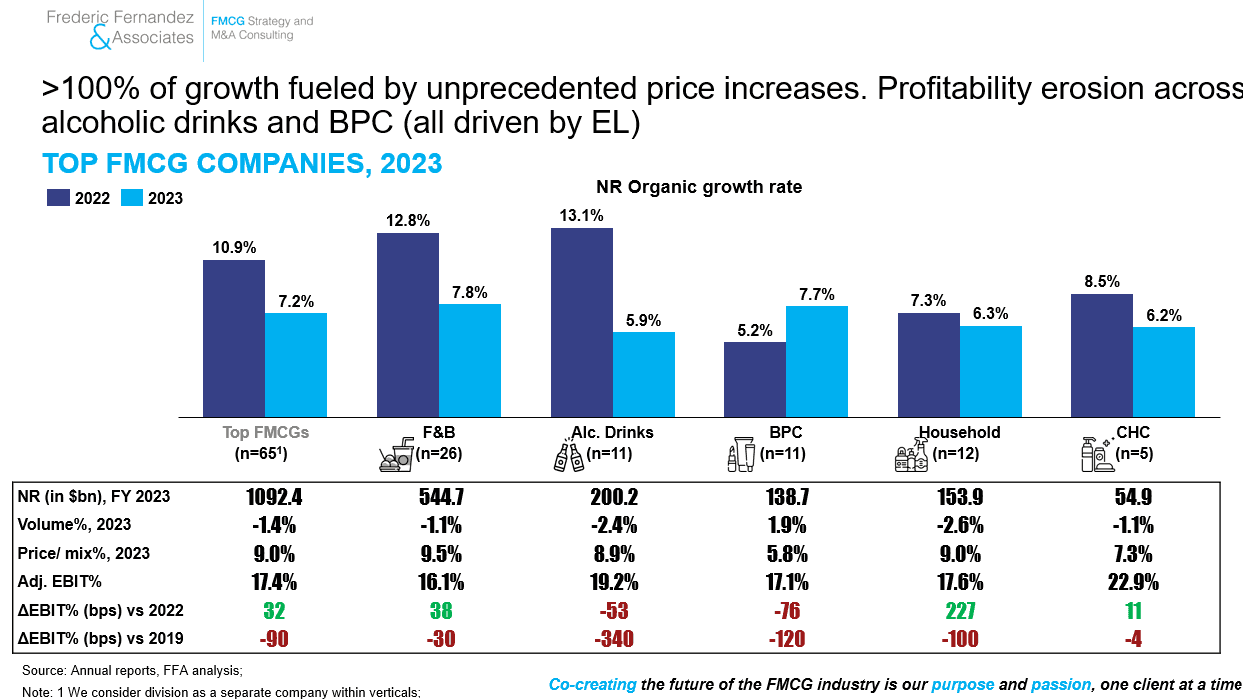
5) >100% of the top-line growth was fueled by unprecedented price increases (+9.0% in FY23) across majority of the verticals. While EBIT margin improved for majority of the verticals vs FY22, none managed on average to achieve pre-COVID levels. BPC negative EBIT average is all driven by EL. On average Alcoholic Drinks performed the worst
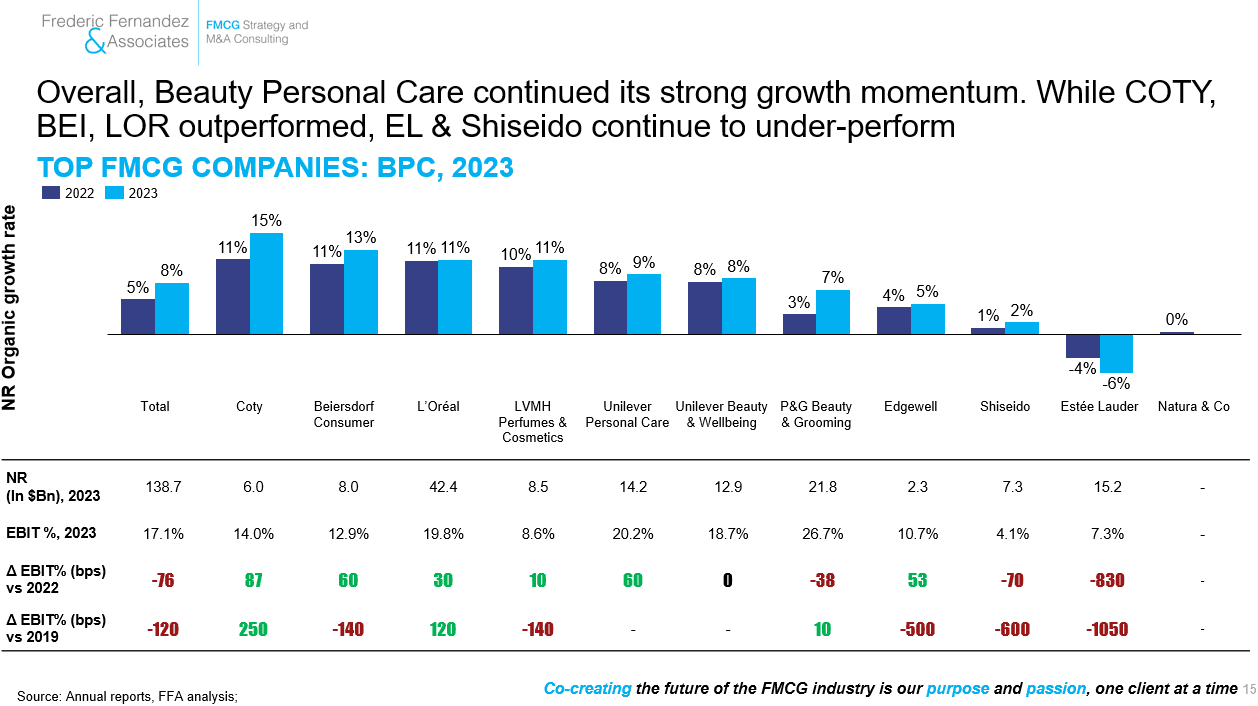
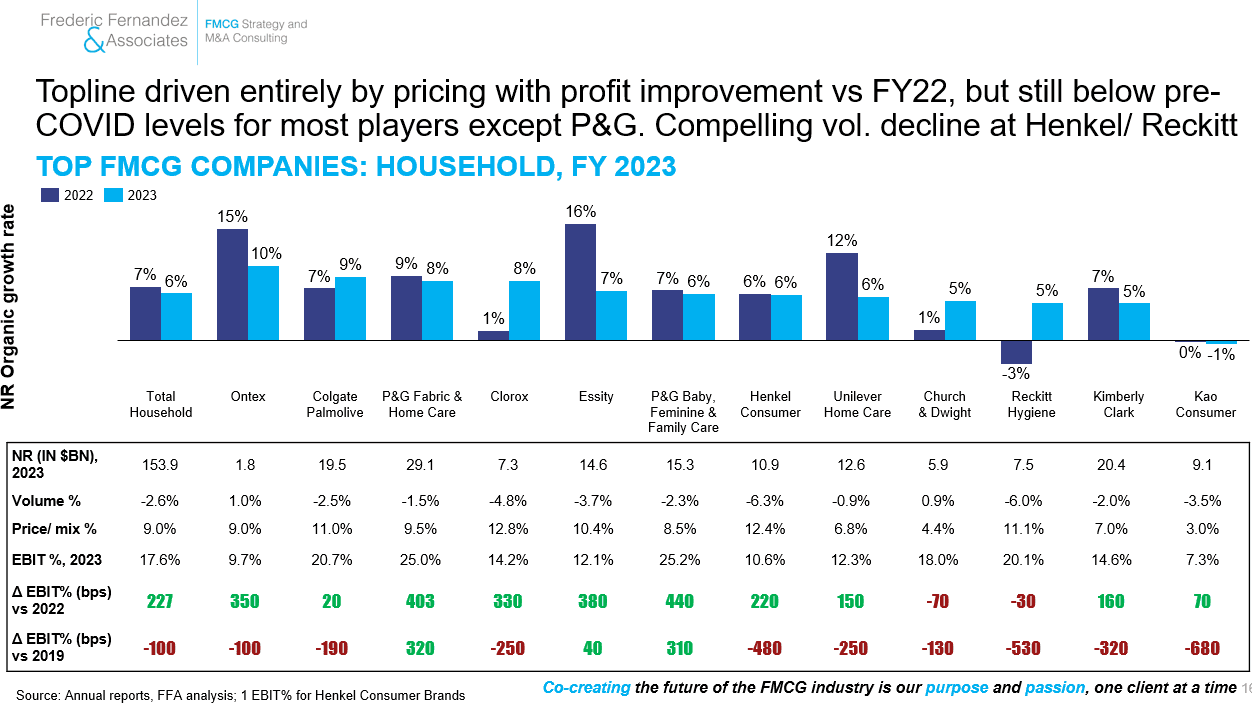
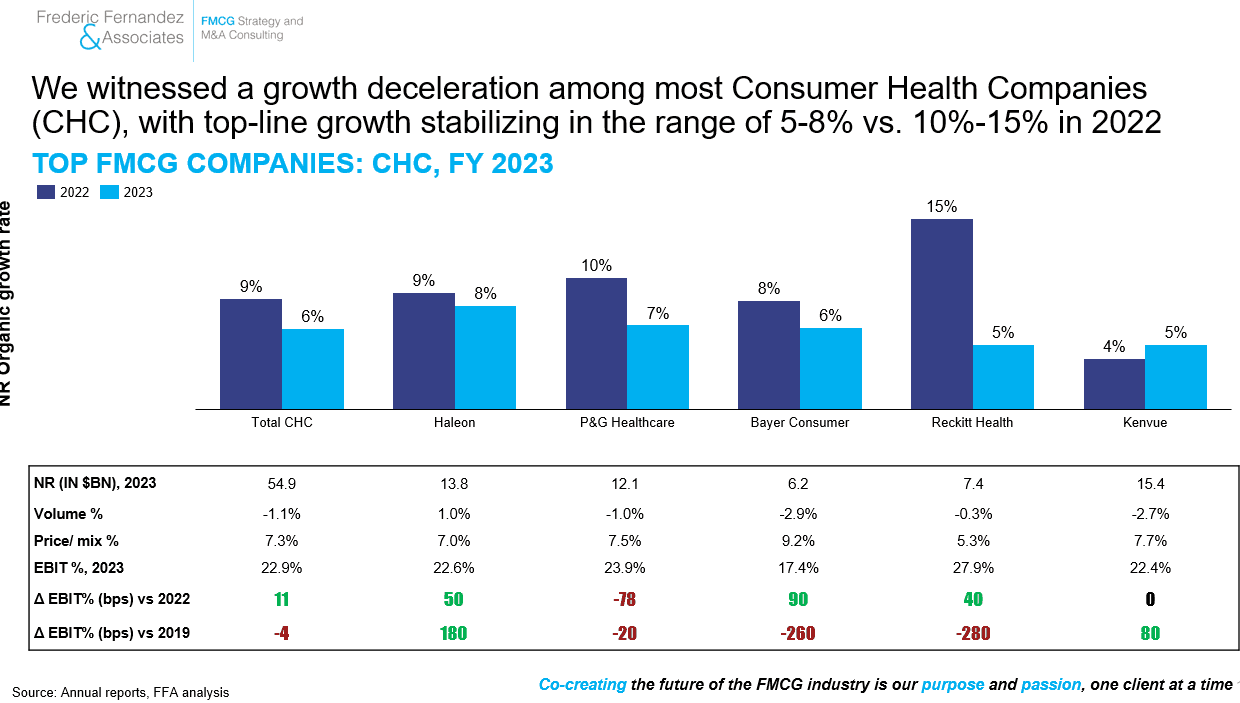
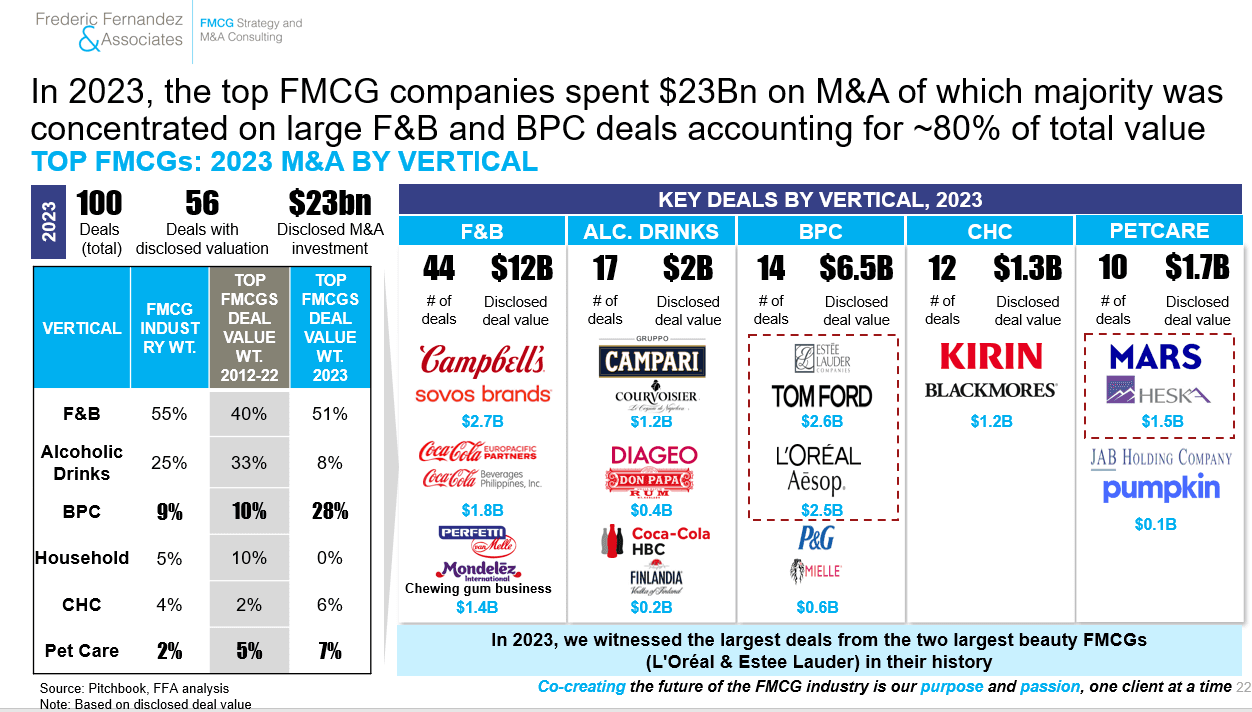
6) In 2023, the top FMCG companies spent $23Bn on M&A, of which a majority was concentrated on large F&B and BPC deals accounting for ~80% of total value. L'Oréal & Estee Lauder completed both their highest value acquisitions in their history (Aesop & Tom Ford)
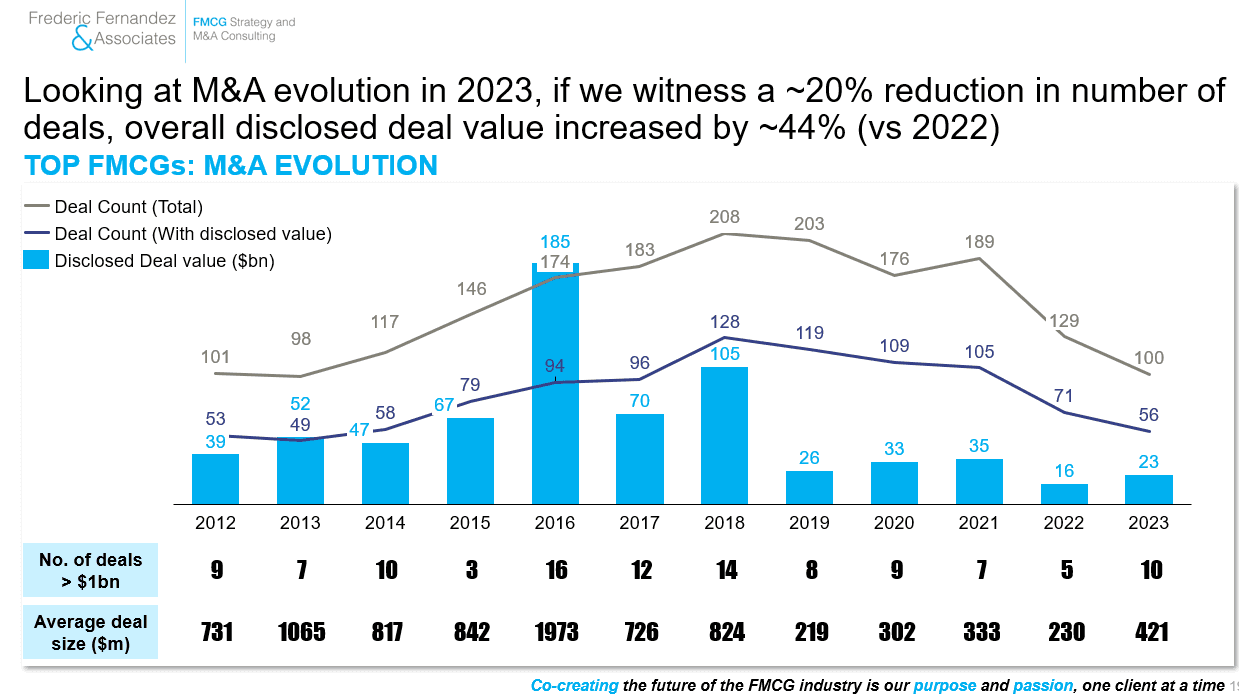
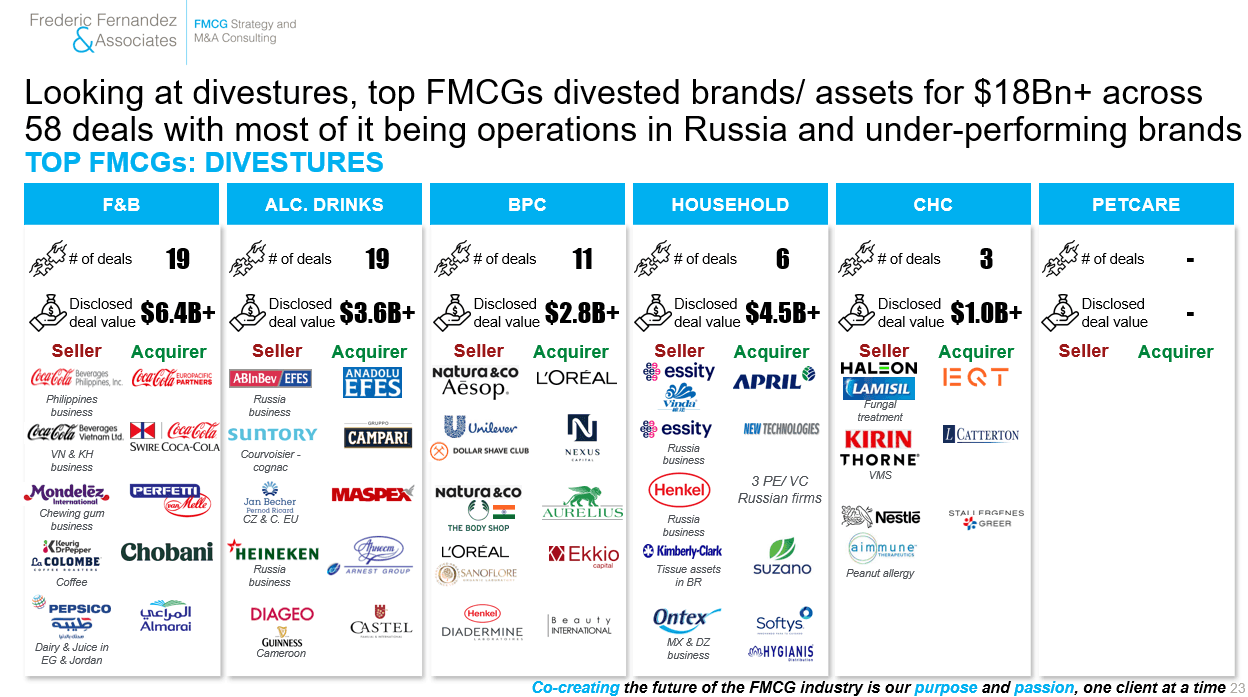
7) Looking at divestures, top FMCGs divested brands/ assets for $18Bn+ across 58 deals with most of it being operations in Russia and under-performing brands
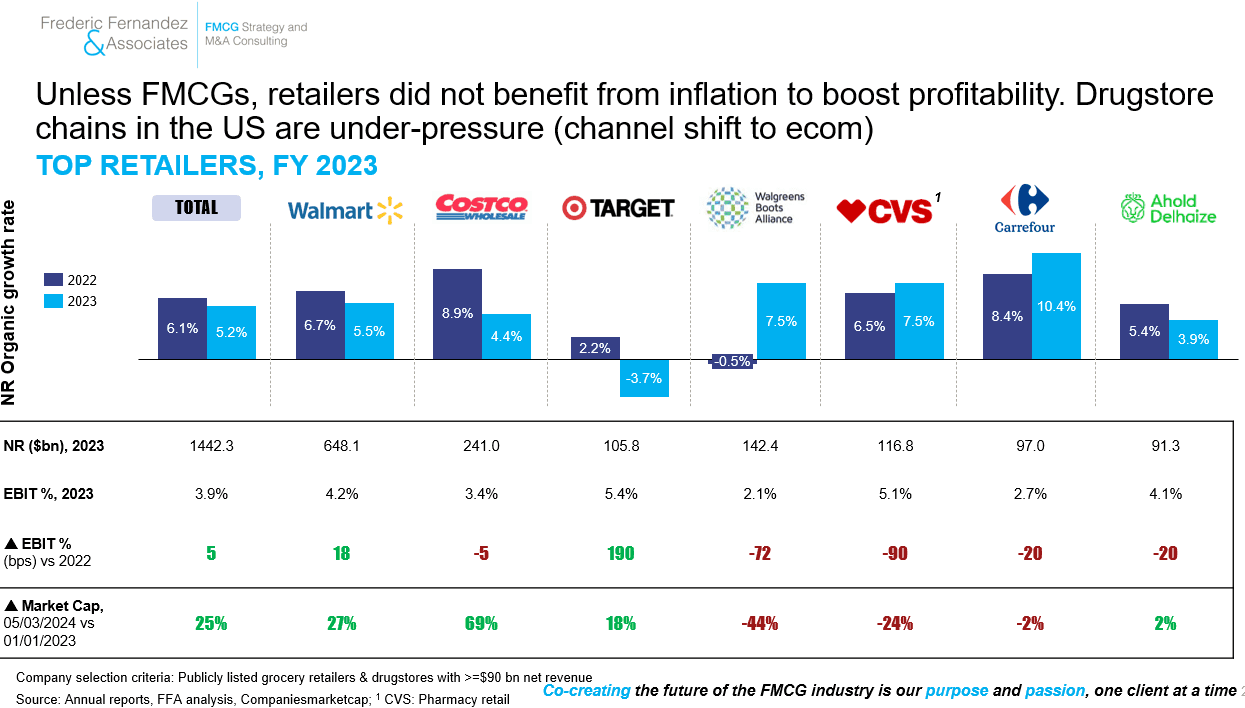
8) Unlike FMCG companies, the world’s largest grocery retailers did not manage to take advantage of the current inflationist situation to expand their profit. We witnessed growth deceleration across majority of the US-centric retailers. Market cap decline at US Drugstore chains (WBA & CVS) is striking & reflect investors' long-term sentiment on the channel
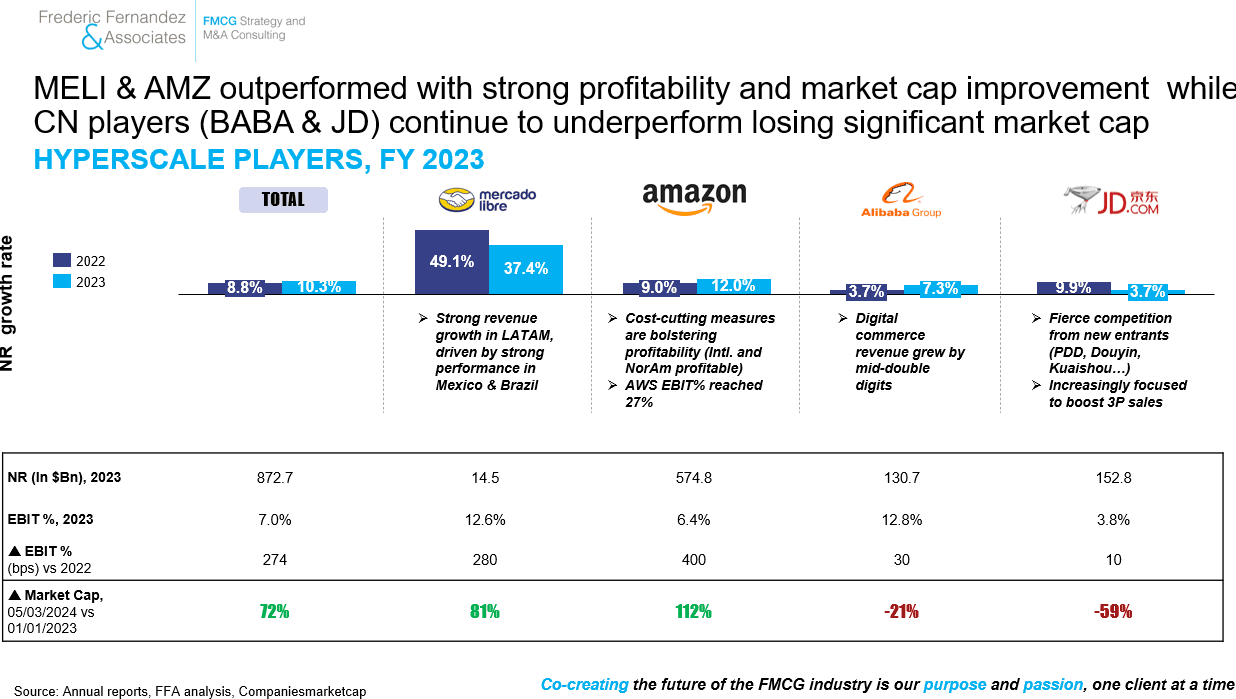
9) Looking at pure ecom players, we witness a growing divergence between (Chinese) Losers & Winners (AMZ, MELI). AMZ market cap grew >100% over the last 15 months
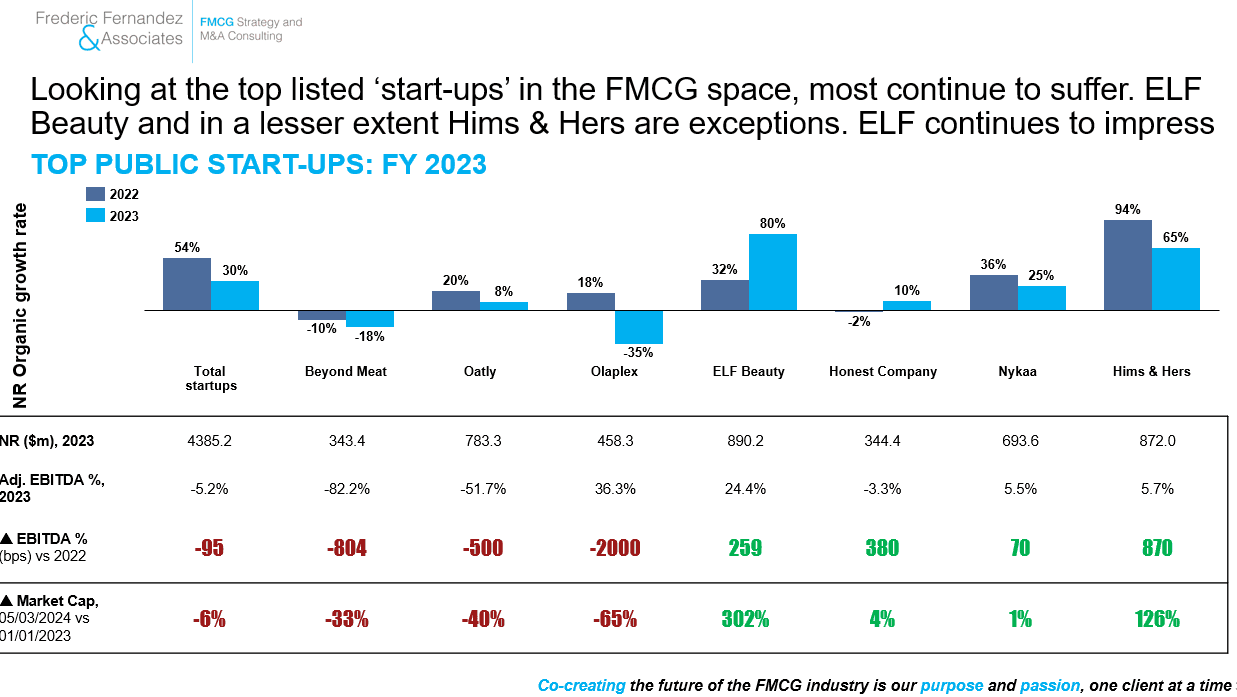
10) Looking at the top listed ‘start-ups’ in the FMCG space, most continue to suffer. ELF Beauty and in a lesser extent Hims & Hers are exceptions. ELF continues to impress
Bringing it all together:
"𝘛𝘩𝘦 𝘨𝘳𝘦𝘢𝘵𝘦𝘴𝘵 𝘦𝘯𝘦𝘮𝘺 𝘰𝘧 𝘬𝘯𝘰𝘸𝘭𝘦𝘥𝘨𝘦 𝘪𝘴 𝘯𝘰𝘵 𝘪𝘨𝘯𝘰𝘳𝘢𝘯𝘤𝘦, 𝘪𝘵 𝘪𝘴 𝘵𝘩𝘦 𝘪𝘭𝘭𝘶𝘴𝘪𝘰𝘯 𝘰𝘧 𝘬𝘯𝘰𝘸𝘭𝘦𝘥𝘨𝘦" Stephen Hawkins. Could this be the largest risk that faces the world largest FMCG companies? 2024 results will tell. Exciting times
Get in touch:
To follow Frederic, please click Here, To start a conversation, email at: frederic@fredericfernandezassociates.com
To get the full deck of this publication, please write us at contact@fredericfernandezassociates.com
To subscribe to our newsletter and receive all our CEOs Insights, sign-up at the following link: FMCG CEOs: Managing For Growth
About the Firm:
Frederic Fernandez & Associates (FFA) is a global bespoke Strategy Consulting Firm exclusively focused on Organic Growth (Zero-Based-Growth® approach), Digital GTM (Ecommerce 2.0®, DTC & Ecoystems and EB2B) and M&A serving the world largest FMCG companies. Its purpose is to help its clients win today while renewing their competitive advantages to win tomorrow. 14 out of the top world 20 largest FMCG companies are repeat Clients.
The Firm's team intervenes all across the globe and across all FMCG categories. To know more about the Firm, please visit our websites: www.fredericfernandezassociates.com
No FFA employees own any stocks or financial instruments of any FMCG companies or companies mentioned in the above article. All the above information are public information
Enjoyed this article?

FMCG CEOs: Managing For Growth
Strategic insights for FMCG/ CPG CEOs